


Possible New Renesis Engine Failure Theory?


Super Moderator
Joined: Apr 2005
Posts: 10,880
Likes: 340
From: Australia
Out of the 6 S2 Nozzle I have here, none have any "location" or "position" marker on them, so when they screw into Rotor Housing with single Copper Washer this Outlet can be at any position or in any direction, naturally it cant extend beyond R H face.
Looking at the new spare S2 engine I have all of the 6 holes are the same as are threads, there would only be a mil (or less) between the end of Nozzle's circumference where Oil exits and Rotor Housing once the Nozzle is seated.
So how can there be any real direct squirting of Oil or atomization?
Last edited by ASH8; Jan 20, 2011 at 12:44 PM.


Ayrton Senna Forever
Joined: Sep 2005
Posts: 406
Likes: 1
From: Europe
Actually the S1's nozzles have not got vacuum connections. As I stated earlier a lot of times that is a big problem if they get vacuum from their air intake side. The oil consumption will be very high, because the engine will sucks only oil without air from the nozzles.

Actually the S1's nozzles have not got vacuum connections. As I stated earlier a lot of times that is a big problem if they get vacuum from their air intake side. The oil consumption will be very high, because the engine will sucks only oil without air from the nozzles.


Ayrton Senna Forever
Joined: Sep 2005
Posts: 406
Likes: 1
From: Europe
Where are those Shadycrew?
The air intake of the nozzle gets air from the intake hose before the throttle body (between the air celaner and the TB). Do you have vacuum there? Then your car has a failure!
The air intake of the nozzle gets air from the intake hose before the throttle body (between the air celaner and the TB). Do you have vacuum there? Then your car has a failure!

Thread Starter
SARX Legend
iTrader: (46)
Joined: Jan 2007
Posts: 33,788
Likes: 462
From: San Antonio, Texas

Those are the oil injectors from a S1, same things as the pics I posted earlier in this thread.

Super Moderator
Joined: Apr 2005
Posts: 10,880
Likes: 340
From: Australia
Actually the S1's nozzles have not got vacuum connections. As I stated earlier a lot of times that is a big problem if they get vacuum from their air intake side. The oil consumption will be very high, because the engine will sucks only oil without air from the nozzles.

The Vacuum (S1 Only) is for the Nozzles internal Check Valve...
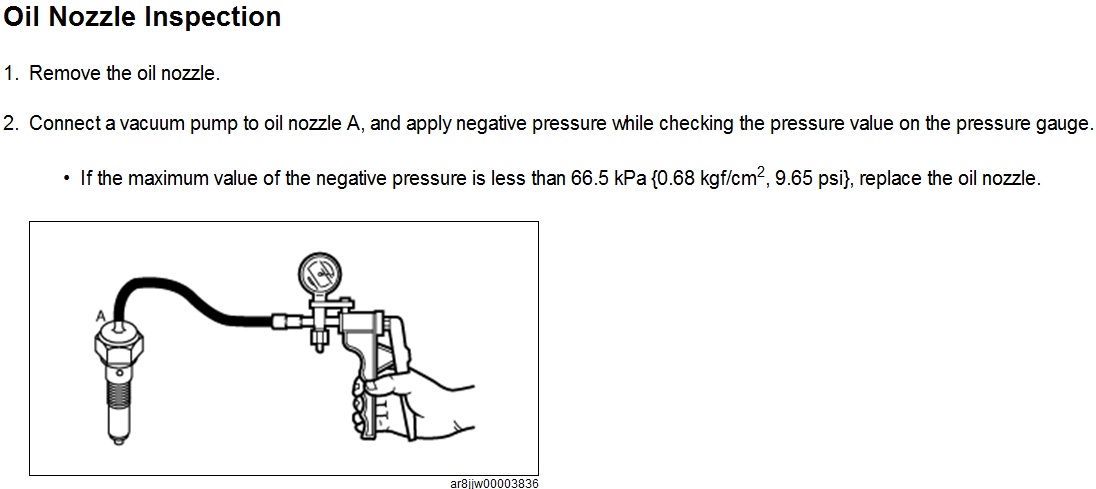


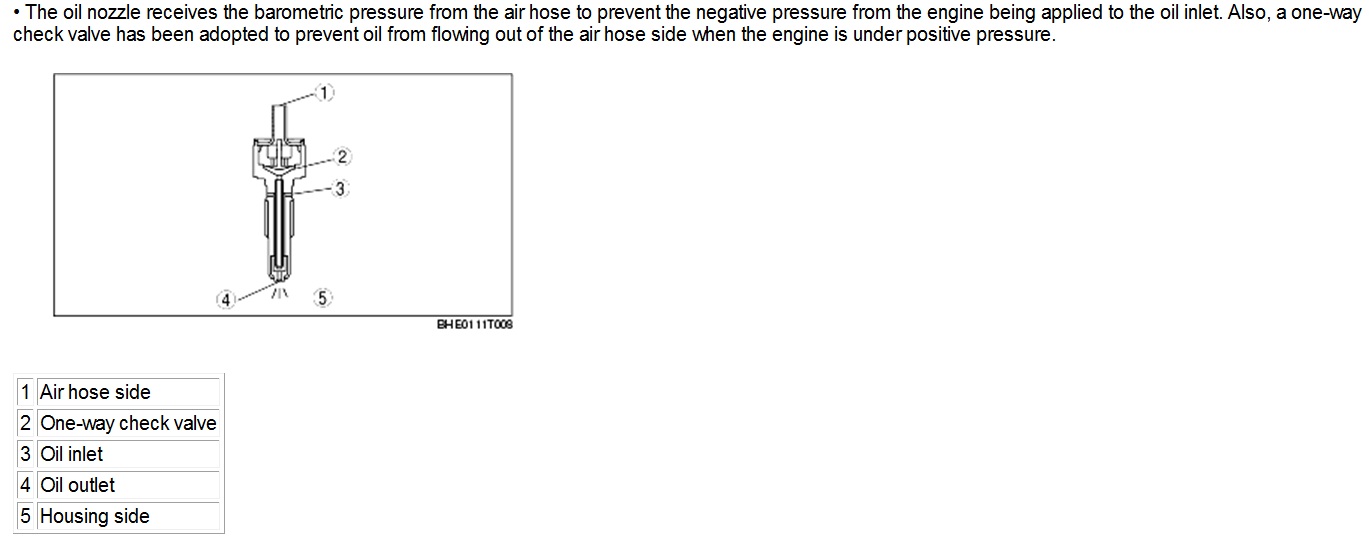

there is vacuum by venturi effect but that is it.
It really is a mystery to me how the S1's work. The dang banjo fittings on the mop lines are pretty strong by themselves and the mop pump doesnt place much pressure on the oil? I guess engine vacuum is what sucks it in? It is balanced agaisnt the atmosphreric pressure (basically speaking) from the intake?
So if you have a tired engine and the vacuum is down to 16 from a normal of 20 then I would assume that less oil would be sucked in?
That system sucks.
OD
It really is a mystery to me how the S1's work. The dang banjo fittings on the mop lines are pretty strong by themselves and the mop pump doesnt place much pressure on the oil? I guess engine vacuum is what sucks it in? It is balanced agaisnt the atmosphreric pressure (basically speaking) from the intake?
So if you have a tired engine and the vacuum is down to 16 from a normal of 20 then I would assume that less oil would be sucked in?
That system sucks.
OD
The air flow is forward, which relieves vacuum on the oil flow, which would otherwise reduce the amount of oil injected.
The lines them selves would perform the same function if not even hooked up to the intake and the only reason they are is for filtration.
Last edited by Brettus; Jan 20, 2011 at 10:14 PM.
wait a minute--- i think i just confused myself?
If the intake line to the nozzles is only there for for barometic pressure then why does the system flow a lot more oil when that line is taken off the intake and left just open to the air?
It shouldnt be any diffence should it?
If the intake line to the nozzles is only there for for barometic pressure then why does the system flow a lot more oil when that line is taken off the intake and left just open to the air?
It shouldnt be any diffence should it?
Thread Starter
SARX Legend
iTrader: (46)
Joined: Jan 2007
Posts: 33,788
Likes: 462
From: San Antonio, Texas
Retested my old ones, look like two were bad after testing all four a few times.
-550 mmhg = 10.5 psi
http://www.flickr.com/photos/9krpmrx8/5374293793/
almost -350 mmhg = 6.76psi
http://www.flickr.com/photos/9krpmrx8/5374893688/
-550 mmhg = 10.5 psi
http://www.flickr.com/photos/9krpmrx8/5374293793/
almost -350 mmhg = 6.76psi
http://www.flickr.com/photos/9krpmrx8/5374893688/
Ayrton Senna Forever
Joined: Sep 2005
Posts: 406
Likes: 1
From: Europe
Let see it again OD:
The oil nozzle receives the barometric pressure from the air hose to prevent the negative pressure from the engine being applied to the oil inlet. Also, a one-way check valve has been adopted to prevent oil from flowing out of the air hose side when the engine is under positive pressure.
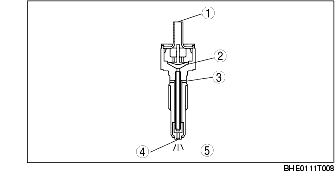
1 Air hose side
2 One-way check valve
3 Oil inlet
4 Oil outlet
5 Housing side
Between the trottle's butterfly valve and the engine is vacuum. But there is atmo pres between the air cleaner and the throttle's butterfly valve. If there would be vacuum at the MOP nozzle's air intake pipe (1), the engine suck's out more oil from the MOP (3) than that is metering. With the atmospheric pressure on the nozzle's air intake (1), the engine's vacuum only sucks (4) the metered oil amount (pushing by the weak pressure of the MOP) and air from the air hose side (1).
The oil nozzle receives the barometric pressure from the air hose to prevent the negative pressure from the engine being applied to the oil inlet. Also, a one-way check valve has been adopted to prevent oil from flowing out of the air hose side when the engine is under positive pressure.
1 Air hose side
2 One-way check valve
3 Oil inlet
4 Oil outlet
5 Housing side
Between the trottle's butterfly valve and the engine is vacuum. But there is atmo pres between the air cleaner and the throttle's butterfly valve. If there would be vacuum at the MOP nozzle's air intake pipe (1), the engine suck's out more oil from the MOP (3) than that is metering. With the atmospheric pressure on the nozzle's air intake (1), the engine's vacuum only sucks (4) the metered oil amount (pushing by the weak pressure of the MOP) and air from the air hose side (1).
See the TSB what happens if the nozzles does not get barometric pres:
http://www.finishlineperformance.com...30-09-2159.pdf

alright heres one for you I am pulling from another thread for your engine failure theory:
maybe our failure problem is much simpler than we think. The ethanol in the fuel is breaking down the Phthalates used in the making of the oil injection lines. Those deposits are then clogging our lines and causing the carbon build up we are seeing. It makes sense if you read the chemistry of exactly what ethanol does to plastic, rubber, and metal (with the exception of aluminum, for some reason aluminum seems to resist the corrosive affects of ethanol)
Just as I said I researched it. I didn't find a whole lot in automotive community. But I went to the AOPA forums, and a couple other aircraft forums I am registered on. I did find a lot of people having problems with not only carbon fiber, but with fiberglass fuel cells. They are having to switch to alluminum in places that have E10 or higher. Also I found information on people with fiberglass boats where the ethanol softens or eats through the boats who use the hull for fuel storage. They are also starting to show that valves break down when introduced to ethanol. Intake valves for one. They are finding corrosion and sticky intake valves. Sound familiar? They were finding trace amounts of parts of the fuel system in the intakes. They analyzed it and found out the ethanol had softened up components of the fuel system which began to redeposit on intake valve and inside of injectors. They are finding that plastics are easily disolved by ethanol then redeposited other places in the engine system. So basically from our fuel pump, to our SSV valve.
(Phthalates, or phthalate esters, are esters of phthalic acid and are mainly used as plasticizers (substances added to plastics to increase their flexibility, transparency, durability, and longevity).)
(GCMS - Gas Chromatography Mass Spectrometry )
"Phthalates are only sparingly soluble in water, however many are readily dissolved by ethanol. Whereas gasoline free from ethanol never picks up phthalates, when ethanol was introduced the very small ethanol molecules diffused into the fiberglass, filler and gel coat materials where they dissolved unreacted phthalates. Having been dissolved by smaller molecules, and almost certainly accelerated by osmotic pressure, some portion diffused back to the surface and was dispersed in the gasoline. Based on our GCMS results to date there are some other, presently unidentified, large molecules that were also leached out by the ethanol and similarly transferred into the gasoline."
"Since they are in solution, the phthalates and the other heavy dissolved molecules are able to pass through the fuel line filters. When the gasoline with ethanol evaporates in the carburetor the heavy molecules do not evaporate but come out of solution and are carried along in the air-fuel mix as an aerosol. When the droplets impinge on throttle plates and on the walls of the induction system they can collect as reported."
"Some of the molecules that impinge on the hot valve stems and under the crowns decompose to leave carbon powder and ash. Others, such as the phthalates that in general have exceptional high temperature stability, remain intact or undergo only partial decomposition and then act as the binder that holds together the carbon particles and ash as the observed"
Some of those should look very familiar
They are also having problems with one way valve systems like our oil injectors have. Basically the ethanol is capable of breaking down the plastic lines mazda chose to use. You can avoid this by making your own teflon lines. The plastic that is broken down in line, is not filtered and can clog the injectors.
(Phthalates, or phthalate esters, are esters of phthalic acid and are mainly used as plasticizers (substances added to plastics to increase their flexibility, transparency, durability, and longevity).)
(GCMS - Gas Chromatography Mass Spectrometry )
"Phthalates are only sparingly soluble in water, however many are readily dissolved by ethanol. Whereas gasoline free from ethanol never picks up phthalates, when ethanol was introduced the very small ethanol molecules diffused into the fiberglass, filler and gel coat materials where they dissolved unreacted phthalates. Having been dissolved by smaller molecules, and almost certainly accelerated by osmotic pressure, some portion diffused back to the surface and was dispersed in the gasoline. Based on our GCMS results to date there are some other, presently unidentified, large molecules that were also leached out by the ethanol and similarly transferred into the gasoline."
"Since they are in solution, the phthalates and the other heavy dissolved molecules are able to pass through the fuel line filters. When the gasoline with ethanol evaporates in the carburetor the heavy molecules do not evaporate but come out of solution and are carried along in the air-fuel mix as an aerosol. When the droplets impinge on throttle plates and on the walls of the induction system they can collect as reported."
"Some of the molecules that impinge on the hot valve stems and under the crowns decompose to leave carbon powder and ash. Others, such as the phthalates that in general have exceptional high temperature stability, remain intact or undergo only partial decomposition and then act as the binder that holds together the carbon particles and ash as the observed"
Some of those should look very familiar
They are also having problems with one way valve systems like our oil injectors have. Basically the ethanol is capable of breaking down the plastic lines mazda chose to use. You can avoid this by making your own teflon lines. The plastic that is broken down in line, is not filtered and can clog the injectors.
Last edited by DocBeech; Jan 21, 2011 at 06:26 AM.

BearBlasterExtraordinair!
iTrader: (3)
Joined: Nov 2010
Posts: 731
Likes: 3
From: Haughton, Louisiana
Ethanol in the fuel lines should have very little to do with gunk in the OMP lines. I can see in the oil nozzles themselves, but with the check valves, it would keep the plastic / ethanol out, wouldn't it?
ok I am clear--part time dementia is a bitch.
I understand the omp design now--took some study, and it appears more complicated than it should be, but it is what it is.
Some ethanol testings locally are showing percentages up to 18-20%! You truelly do not know what you are putting in your tank. You know some water has to be in there also.
So if you are tuning on the edge, then I guess this has to be kept in mind?
Almost like a duel fuel car.
Even stations that use to be "pure gas" is feeling the pressure. Pure gas sure runs better in my car and it gets much better gas milage.
9K dang- if you are not motivating me to go ahead and test my nozzles before I fire this engine up. You can test them will they are in the engine cant you?
OD
I understand the omp design now--took some study, and it appears more complicated than it should be, but it is what it is.
Some ethanol testings locally are showing percentages up to 18-20%! You truelly do not know what you are putting in your tank. You know some water has to be in there also.
So if you are tuning on the edge, then I guess this has to be kept in mind?
Almost like a duel fuel car.
Even stations that use to be "pure gas" is feeling the pressure. Pure gas sure runs better in my car and it gets much better gas milage.
9K dang- if you are not motivating me to go ahead and test my nozzles before I fire this engine up. You can test them will they are in the engine cant you?
OD

You would have to pull your upper intake to get at them....not sure how accessable they would be with your blower on there either  You could pull a vacuum on the supply line...and if it works you can assume that all 4 are working. If it doesn't you can only guess as to how many are faulty.....but I guess at that point it wouldn't matter...you would have to pull them to figure out what was up
You could pull a vacuum on the supply line...and if it works you can assume that all 4 are working. If it doesn't you can only guess as to how many are faulty.....but I guess at that point it wouldn't matter...you would have to pull them to figure out what was up

