When you click on links to various merchants on this site and make a purchase, this can result in this site earning a commission. Affiliate programs and affiliations include, but are not limited to, the eBay Partner Network.
Yeah, that's the approach I've taken up till now but finally decided it was time to figure this out
So I did some more testing today. I changed my low-range open-loop entries and the fuel warm up entries back to 14.7 to see if it changes my commanded AFRs at all and... nope, not a bit.
So with that, I came up with this formula to convert my closed loop correction test values to the commanded afrs I have logged:
Correction to AFR Formula: 14.7*(1+CORRECTION)
e.g. 14.7*(1+(-0.075)) = 13.6
And to get the appropriate correction value for a target AFR:
AFR to Correction Formula: (1-(CORRECTION/14.7))*-1
e.g. (1-(13.6/14.7))*-1 = -0.075
Could be just me but those formulas looks a little too clean to be coincidence
1. Copied my open-loop map into a spreadsheet
2. Created a second sheet that was all references to the first, then deleted enough RPM rows to fit into the 12 that the closed-loop map has
3. Created a third sheet that was links of the second, with an offset for the over-run/idle column, and added the formula to each cell.
4. Swap the axes and y-axis in the closed-loop tables to match the open-loop tables
5. Copy the entire last sheet, select top left column in the first closed-loop table, edit -> paste from clipboard -> with axes. Repeat on other closed-loop table.
I'll test it out tomorrow.
Last edited by archwisp; May 30, 2021 at 09:06 PM.
Welp. It looks like that did what I wanted I followed the process above and logged another run - the same drive I've been doing all my testing with - a nearby twisty/hilly road.
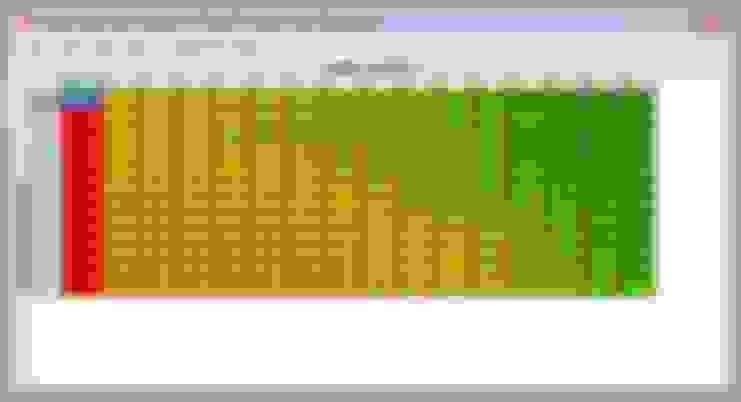
The screenshot below shows the spreadsheet from step two above, vs the logged commanded AFRs. Now just need to figure out why the commanded AFRs are capping out at 12.5.
This result is lining up much closer with what I would expect from tuning courses. I think the variation of the table entry vs the logged commanded afr (e.g. 13.39 vs 13.23 at 3000 rpm/6 load) should be a matter of MAF scaling and/or VE tuning.
I've been thinking about why you might have seen different results from playing with closed-loop tables and your much smaller correction results...
I'm thinking, if you scaled your MAF to match to the open-loop targets throughout the range, you're basically just modifying the maf output so that it cancels out the lambda target adjustment (stock map is pretty close to lambda 1 throughout) up or down. That would have exponential effect on the lambda formula and probably produce the results you saw. So to get these results, you'd need to rescale back to an "accurate" maf scale and then set your open loop tables.
My ecu code is n3m2 18 881k. However, if you receive the map data, please mark it as a different VIN, and tell me what PCM VIN is suitable for my vehicle, so I can't get information from Korea. It's a 2008 model and an auto model. 6Speed
My ecu code is n3m2 18 881k. However, if you receive the map data, please mark it as a different VIN, and tell me what PCM VIN is suitable for my vehicle, so I can't get information from Korea. It's a 2008 model and an auto model. 6Speed
I've been thinking about why you might have seen different results from playing with closed-loop tables and your much smaller correction results...
I'm thinking, if you scaled your MAF to match to the open-loop targets throughout the range, you're basically just modifying the maf output so that it cancels out the lambda target adjustment (stock map is pretty close to lambda 1 throughout) up or down. That would have exponential effect on the lambda formula and probably produce the results you saw. So to get these results, you'd need to rescale back to an "accurate" maf scale and then set your open loop tables.
Can you do me a favor and reproduce a log like this one please so I can see that you are able to run in closed loop richer than this ?
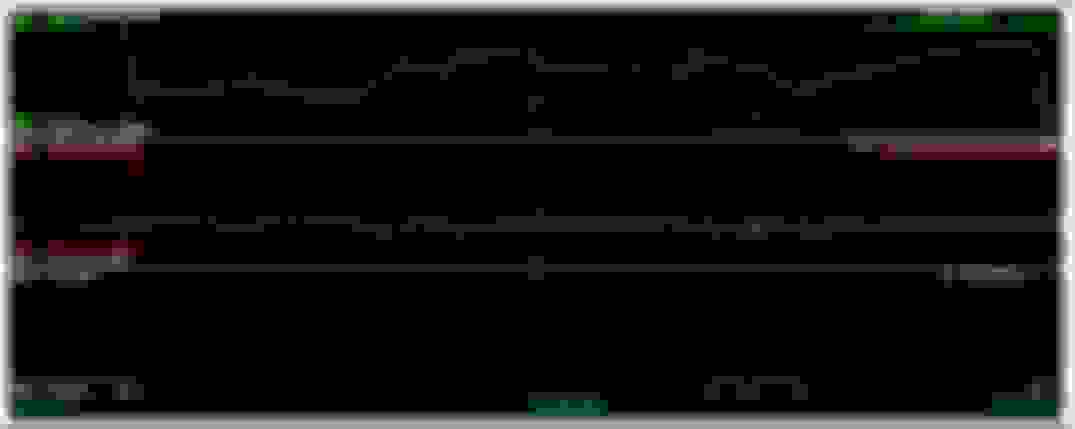
This was at 3000 rpm in 3rd gear (50km/hr) on a flat road with max CL correction (according to me) . As you can see the average is approx. 13.7.
I attached the log file that I generated that graph from on the 31st. I think I was mostly in second gear but my OL and CL maps were identical, and there are some ~3000 rpm stable sections in there. You can cross-reference this file with the tables I posted above.
Here's a quick view of part of it. ~3200 rpm, 13.18 commanded, 13.25 measured, fuel status 1 = 2.
I've been working on MAF calibration in open loop since then, so newer logs won't show what you want. I'll try to get it all consolidated and a fresh log today but I think this log will show what you want to see.
Keep in mind this was before I started working on MAF calibration and some of my actuals ended up like 5-10% richer than the commanded target.
Here's a quick log from going down the street after some MAF calibration and re-enabling closed loop with the maps from the 31st. Got some other stuff going on today but I might be able to get some logs with even lower command targets tomorrow.
Sorry to interrupt your discussion with Brett ..
Only a 162 g/s at 8120 rpm
🤔 that seems a bit low
Edit: And your Voltage seems low
Edit Edit: Never-mind the g/s thing, serves me right for looking at that log on my phone.
Low-gear uphill pull? We don't really have any flat roads around here.
Edit: Also, I haven't really spent much time calibrating the > 2v portion of my maf. It's been a busy week.
No flat roads will make it challenging to tune considering the transients that maybe impacting the AFR's.
I don't think a low gear up-hill pull would cause that, but I noticed that the Throttle Position wasn't 100% so it appears not to be a WOT pull.
That said I'm not very familiar with the ME naming.
On ATR / Cobb there are two parameters for throttle "Accel.Pedal Pos.(%)" and "Throttle Position".
It's the Accel Pedal Pos I use to determine a WOT run. Anyways I will let you and Brett figure that out
Have you done anything to the OMP settings?
The flat line on the OMP while the car is warming up has the metering pump at position 30
I've never seen anything like that before.
Is that normal?
Absolute throttle position can/will max out around 78~82% depending on the software used to log the value, this isn't an rx8 specific thing, its actually common across most OBD2 model cars.
Also, in re to the OMP, it will hold steady @30 until car has warmed up past either 65 degrees C or 75 degrees C (cant remember what one now), and also directly after start up, the omp will do a full sweep, so go from 3 right up to 60, while engine is in operation, its possible to see this sweep in logs if recording omp position
Absolute throttle position can/will max out around 78~82% depending on the software used to log the value, this isn't an rx8 specific thing, its actually common across most OBD2 model cars.
Also, in re to the OMP, it will hold steady @30 until car has warmed up past either 65 degrees C or 75 degrees C (cant remember what one now), and also directly after start up, the omp will do a full sweep, so go from 3 right up to 60, while engine is in operation, its possible to see this sweep in logs if recording omp position
Ah cool thanks,
I guess I've never really bothered to log the OMP from a cold start.
I'll have to give it a try to check it out.
I have played with V/T and can see it should work just as well as M/E does . However , I haven't yet heard of anyone that's successfully tuned a turbo with V/T yet . I'm sure there are a few out there but you'll get more help on this forum if you go with M/E.
I have played with V/T and can see it should work just as well as M/E does . However , I haven't yet heard of anyone that's successfully tuned a turbo with V/T yet . I'm sure there are a few out there but you'll get more help on this forum if you go with M/E.
I think WCS and I are in the process of doing that turbo tuning using V/T. Its effectively the same straightforward maps that you worked out years ago in M/E. At a high level, the deltas between the tuning tools are more about the user interface and the integrated logging than accessibility to any missing/undiscovered maps.
Question I have for you Brettus: Is there any value to tuning the VE and Torque tables? I mean, when tuning speed density systems, VE is god and you tune everything with it. But in a MAF system, it seems the PCM should be calculating the fuel more directly with the MAF flow * target AFR to get the fuel volume directly. The VE seems like an extraneous value (of little value?)
Or is VE used to determine the current load given the MAF flow? Since the fuel/ignition maps are all Load vs RPM based, this might make some sense to get a more "accurate" load value, compared to a basic calculation of MAF flow vs cubic displacement.
Hi, Anyway to check if the p2 and secondary injectors are firing using mazdaedit logger. 6sp Hp 4 yellows and 2 red (stock injectors) In open loop afr is lean during boost.
I have edited:
max load limit, increased load tables in OL -12, 3-4, 5-6 , increased load tables in timing lead and trailing and VE map.
Looks like a zoom zoom - boom in the making with those afrs. Pretty risky business learning to tune on a boosted Renesis !!!!!
You can only monitor P1 injectors unfortunately. Id suggest your issue is in the reported maf value being too low. This could be due to any number of reasons .... but most likely being maf scaling being way off from a poorly designed maf setup.