When you click on links to various merchants on this site and make a purchase, this can result in this site earning a commission. Affiliate programs and affiliations include, but are not limited to, the eBay Partner Network.
I assume you're talking about a one rotor engine based on 13B parts? But the way you notated "(654/2)*2)" doesn't make sense. The weight formula for a one-rotor using 13B parts would be more accurately represented by:
0.9 + 0.654 + 1.4 = 2.954L.
I suppose you could do that, but I don't see it spooling an appropriately sized turbo in a way that is remotely usable for autocross. Also, I don't see a legal SM RX-8 getting below 2500lbs with an engine making enough power to be competitive. I could be wrong, but I don't think it's possible.
I think the weight formula for rotaries is reasonable in SM. IMO the rules should be written to encourage builds that don't require extreme costs to put together, so more exotic stuff should be penalized with more weight. In the grand scheme of things, a 13B turbo needing to weigh 120-ish lbs more than a 2.5L turbo 4 is not that big of a deal, especially when you consider the rotary should spool faster (much more exhaust heat) and should have a lower Cg and polar moment of inertia.
Where the weight formulas really fall apart is with big displacement (cheap) engines. An RX-8 with a naturally aspirated 5.3L LS should be able to make the same low RPM power as my car but it'll be harder to make the same power up top. And yet it has to weigh over 3,000lbs. Makes no sense.
A number divided by itself is always 1. You didn’t have to divide total 2-rotor displacement by 2 and then multiply by 2 in your formula, which made no sense to me either.
0.9 * 2 + (1308/2)*2 = 3.108L. Plus 1.4L for forced induction.
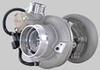
the turbo exists and is readily available. The output goal is no issue, even understated. As you noted, the target weight is the issue. In my estimation 2300 lbs might be possible. Lighter, less torque with more rpms, creates a situation where heavy HD components are not as necessary. Just a pipe dream though ...
you crack me up man, you still don’t recognize I copied your formula and just plugged the numbers in. I didn’t bother changing it because I know it’s .654L/rotor, but more importantly; *it doesn’t matter* and editing posts on my phone is a pain. I boffed up the formula previously though and can appreciate that you now think I’m that dumb. That’s on me, but how about we spare everyone else and not add a page or two nitpicking each other apart over pointless minutia up until there’s a blowout, ok?
I also won’t bog your thread down any further over the alternative engine scenarios. Thanks for assisting me with the original question.
I don't think you're dumb. But I was really struggling trying to understand how you were creating a two rotor engine that was exactly half the displacement of a 13B. It's all good though.
Enjoying the thread, really nice car .
100% agree with your reasons for not doing a 13b.
Love the engine, hate the cost. It's unfortunate the bang for the buck has faded so much.
Here's what I did just to give you some ideas. I tossed the whole OEM fuel pump assembly and made my own fuel pump hanger. I needed to make a return-style fuel system and couldn't find a clean way to hack the OEM assembly, so I decided to start with a clean sheet design. It's really simple and was fairly easy to make. It's just a big steel circle with a couple of posts welded to the bottom and some holes at the top. I used a DW300 fuel pump, Radium siphon jet pump attached to the OEM siphon hose, a Radium bulkhead electrical connector, and some ebay bulkhead AN-6 fittings.
It's not pictured, but I used a 3x15 hydramat on the bottom of the pump (attaches directly to the DW300 pump). It sits nicely diagonally in the bottom of the tank. I also routed the return/siphon line so it dumps directly on top of the hydramat, which should help to keep it fed with fuel.
It has worked well, but so far I have only tested it on track down to 1/2 a tank.
.
Or just do the same thing with this slightly modified and bolted to a top plate instead
I had to redesign the transmission crossmember to accommodate a GM-style gearbox mount which is used on the G-force. Yay fun
Fits like a glove.
ABS now lives behind the driver's seat and all lines were removed and remade using PTFE AN fittings.
The G Force gearbox swap created a ripple effect of changes. I needed to stand the engine straight up to accommodate it, and that meant the ABS pump needed to move since it was where the inlet plenum's path. The easiest spot was behind the driver's seat. I also relocated the remote oil filter and cleaned up some of the crankcase ventilation and catch cans. This gave me room to move the ECU and make some brackets to hold the shock canisters. It's a lot easier to work under the hood now. Next up is deleting the stupid prop rod, and I guess I should continue gutting the underside of the hood to get the last pound of weight out of it.
First time driving the car with the new gearbox. Seems like it's running great, and it's going back on the dyno on Saturday to run in the motor and update the tune for speed/density.
Back on the dyno, with fun dog box noises. The car ran flawlessly for the 30 or so runs we did dialing in the cams, transient throttle, and various levels of boost.




 you crack me up man, you still don’t recognize I copied your formula and just plugged the numbers in. I didn’t bother changing it because I know it’s .654L/rotor, but more importantly; *it doesn’t matter* and editing posts on my phone is a pain. I boffed up the formula previously though and can appreciate that you now think I’m that dumb.
  That’s on me, but how about we spare everyone else and not add a page or two nitpicking each other apart over pointless minutia up until there’s a blowout, ok?