


Displacement of Mazda rotary engine


Thread Starter
Registered
Joined: Nov 2022
Posts: 6
Likes: 1
Displacement of Mazda rotary engine
An internal combustion engine operates an amount of fluid in a working chamber. If the engine burns gasoline, the working fluid follows an idealized thermodynamic cycle called Otto cycle.
The volume of the working chamber cyclically varies between a maximum and a minimum. If during the cycle the volume varies in four phases, the engine is known as four-stroke engine.
The difference between the maximum and the minimum volumes is called swept volume or displacement, and is equal to the amount of fluid operated by the ideal cycle. If in the engine there are multiple chambers, each one carrying its own cycle, the displacement of the single one is called unitary displacement, and the sum of them all is called total displacement.
Displacement of an Otto cycle/engine is not correlated with how many turns the crankshaft does during the cycle. It has to be evaluated identifying the single cycle.
Let's take a three-cylinder four-stroke engine with unitary displacement of 654.7 cm³ and total displacement of 1964.1 cm³.
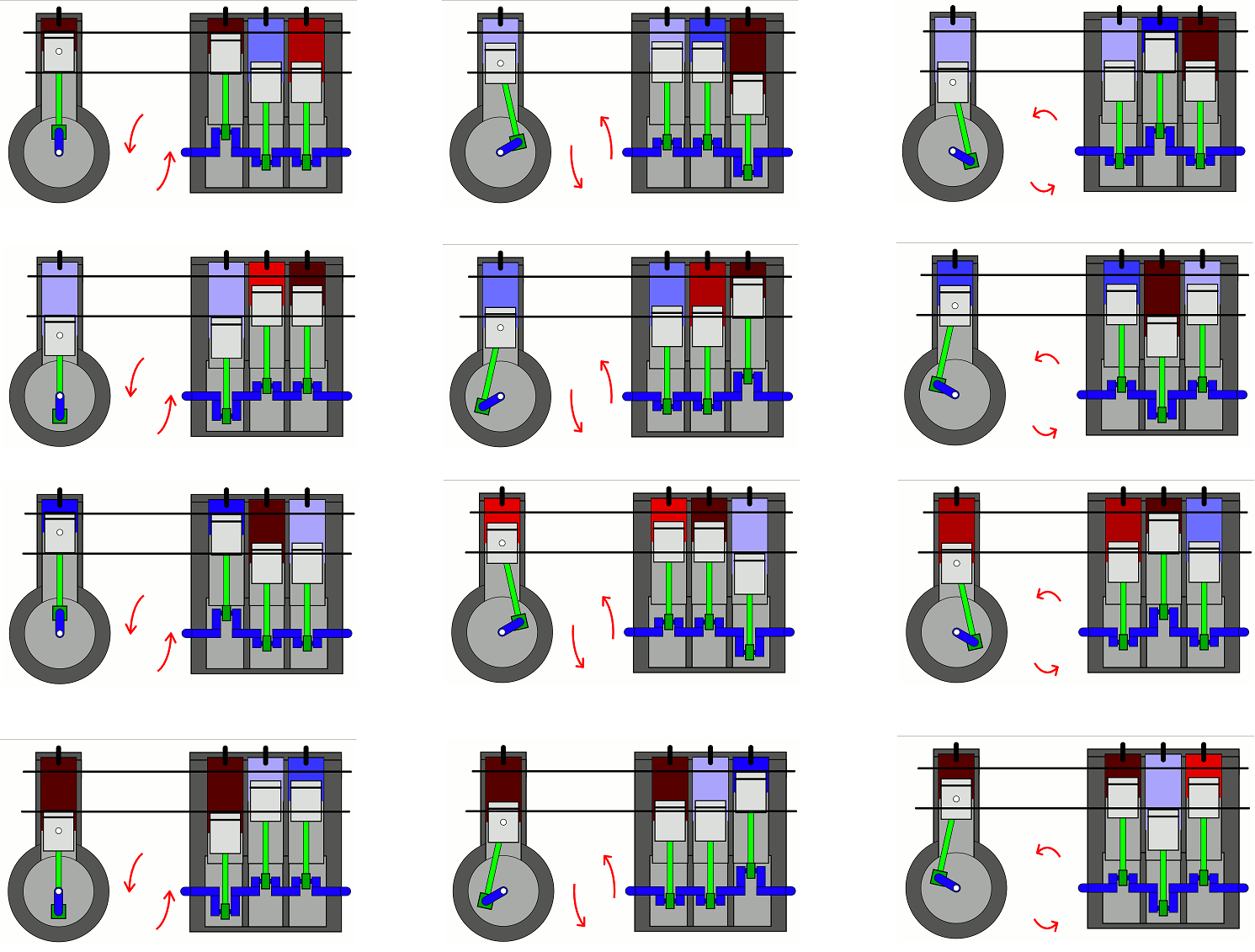
There are 3 different cycles not in phase one to another. In 2 turns of the crankshaft, each one of the three cycles is completed.
If we put a gear train with gear ratio=2/3 after the crankshaft, the "new output shaft" does 3 turns to complete the cycles. But, even if we don't know that the 2/3 gear train is there, we rate the engine 1964.1 cm³ anyway.
This to show that displacement has nothing to do with how many turns the shaft does during the cycle.
Now let's take a Wankel engine with only a single rotor with the 13B geometry.
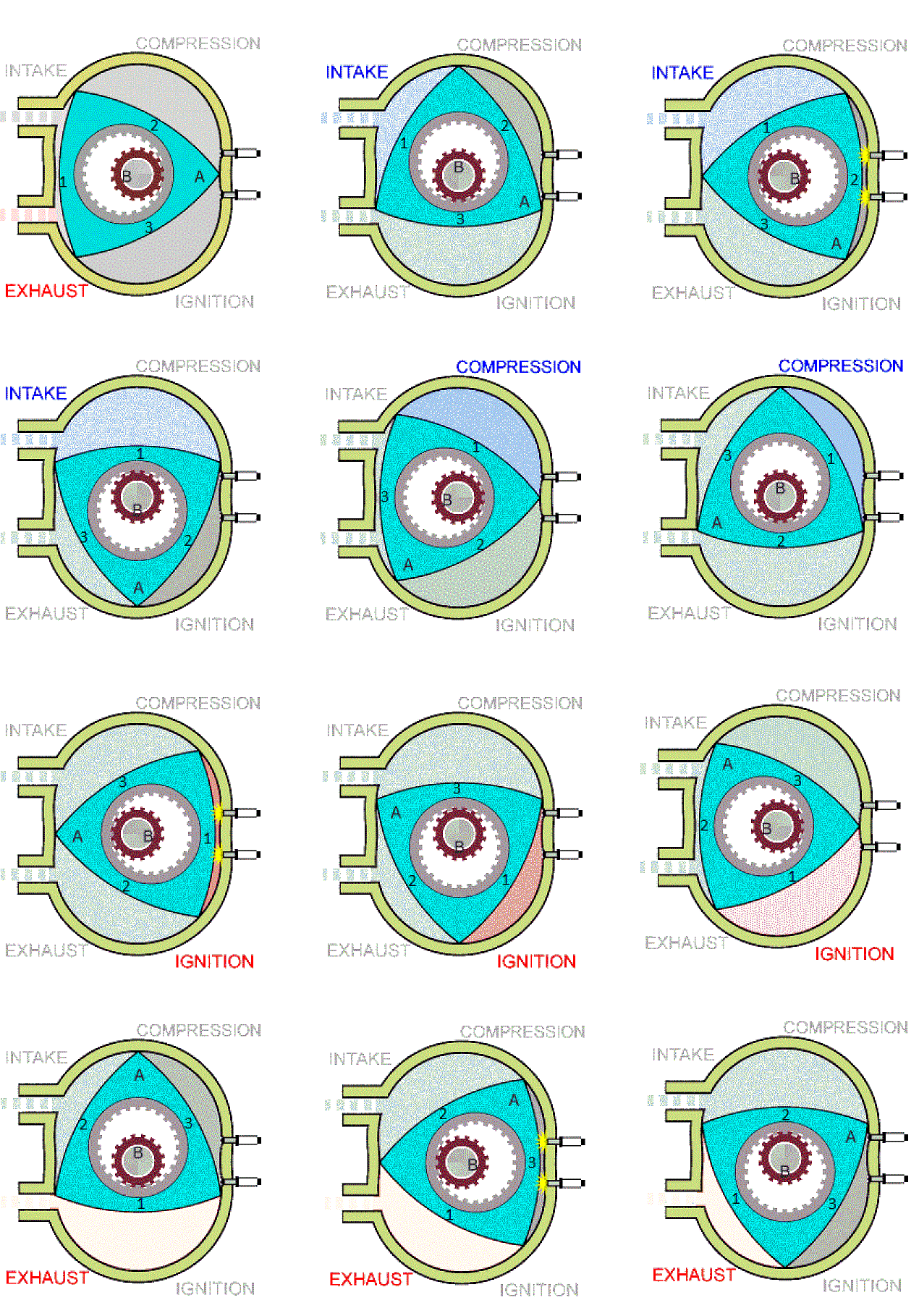
There are 3 different cycles not in phase one to another, one for each face of the rotor. It takes 3 turns of the crankshaft to complete the cyles. The unitary displacement is 654.7 cm³, and the total displacement is 1964.1 cm³.
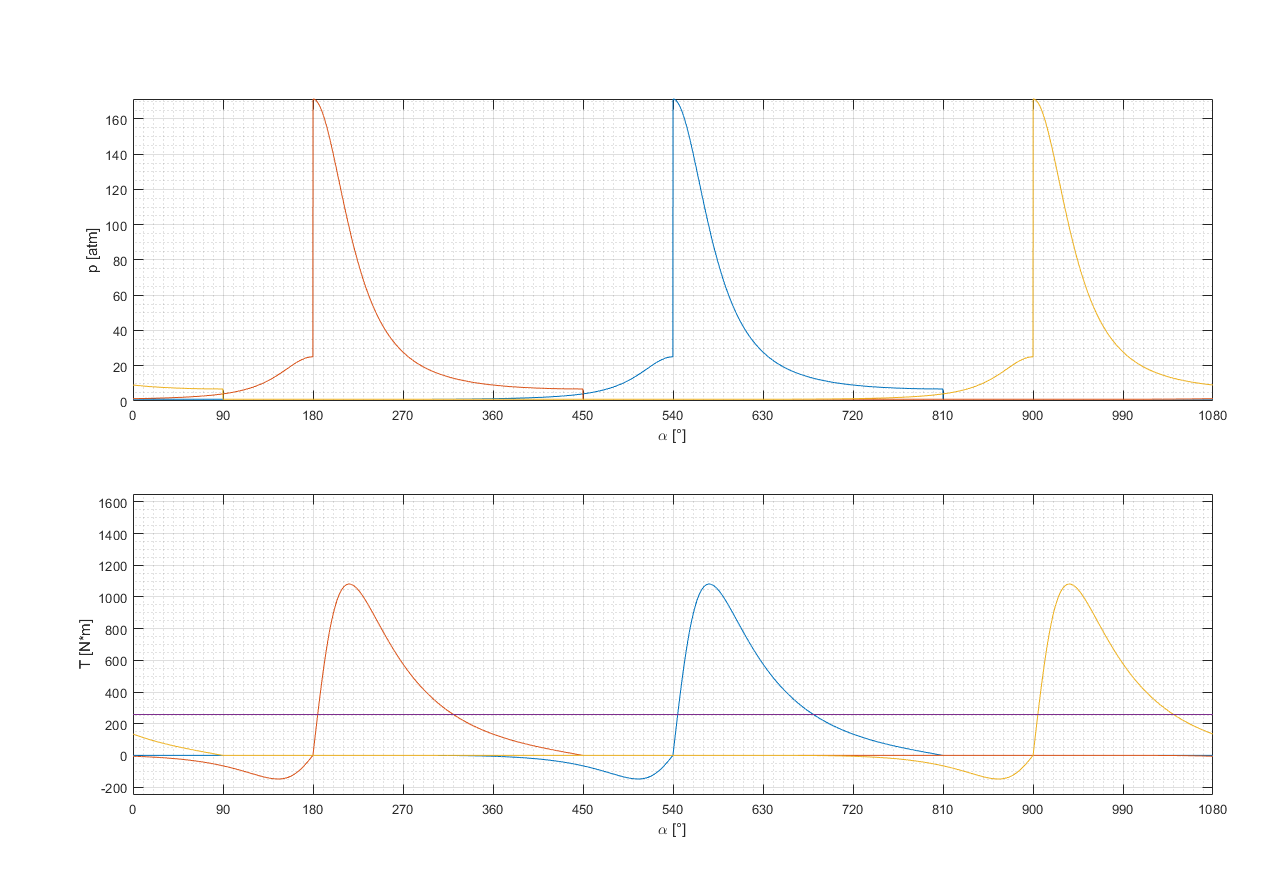
Taking ideal Otto cycles, no mechanical or fluid friction, in the first graph is shown the pressure of the cycles as the crankshaft rotates. In the second graph is shown the torque generated by the cycles as the crankshaft rotates. Blue curve is face 1, orange is 2, yellow is 3. Purple line is the mean total torque.
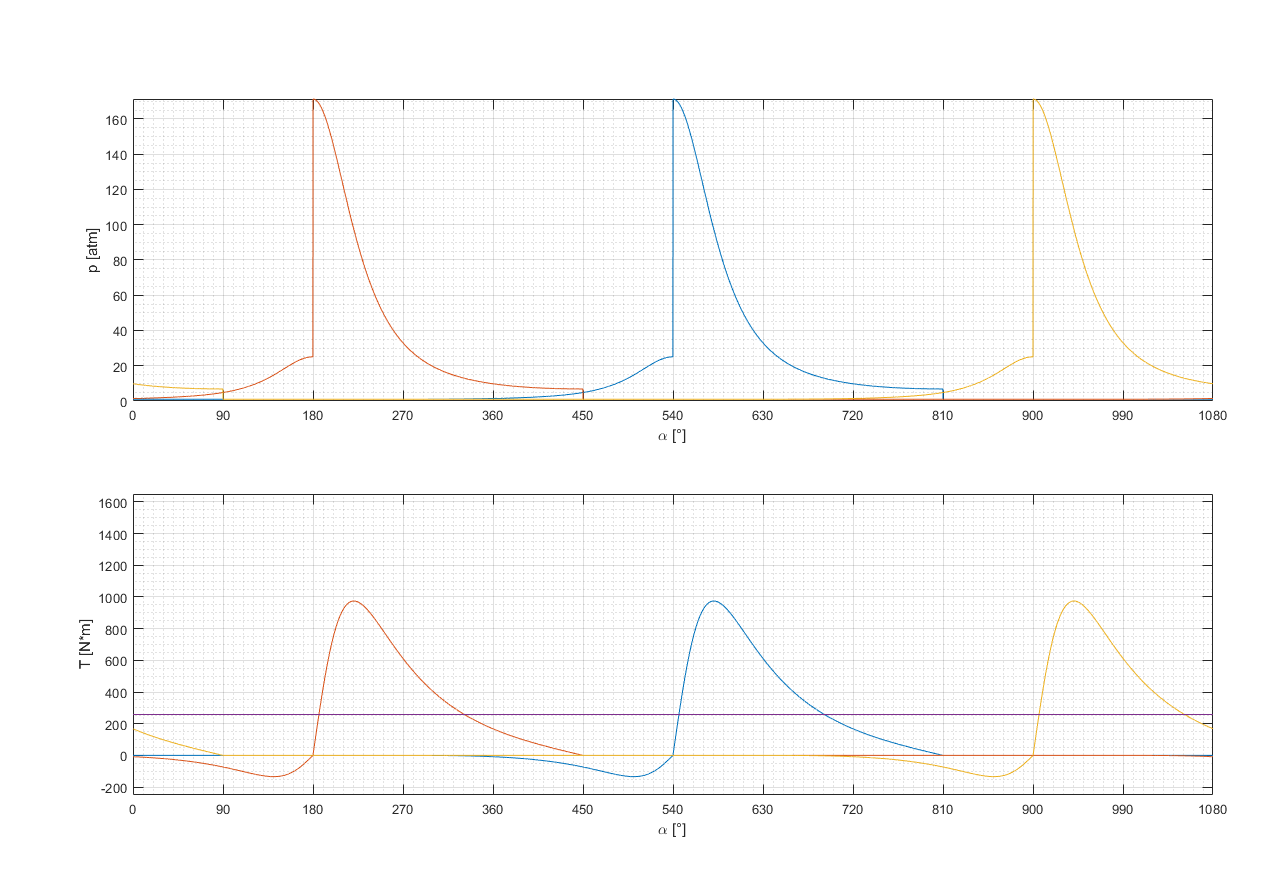
Back to the three-cylinder engine. Blue curve is cylinder 1, orange is 2, yellow is 3. Purple line is the mean total torque.
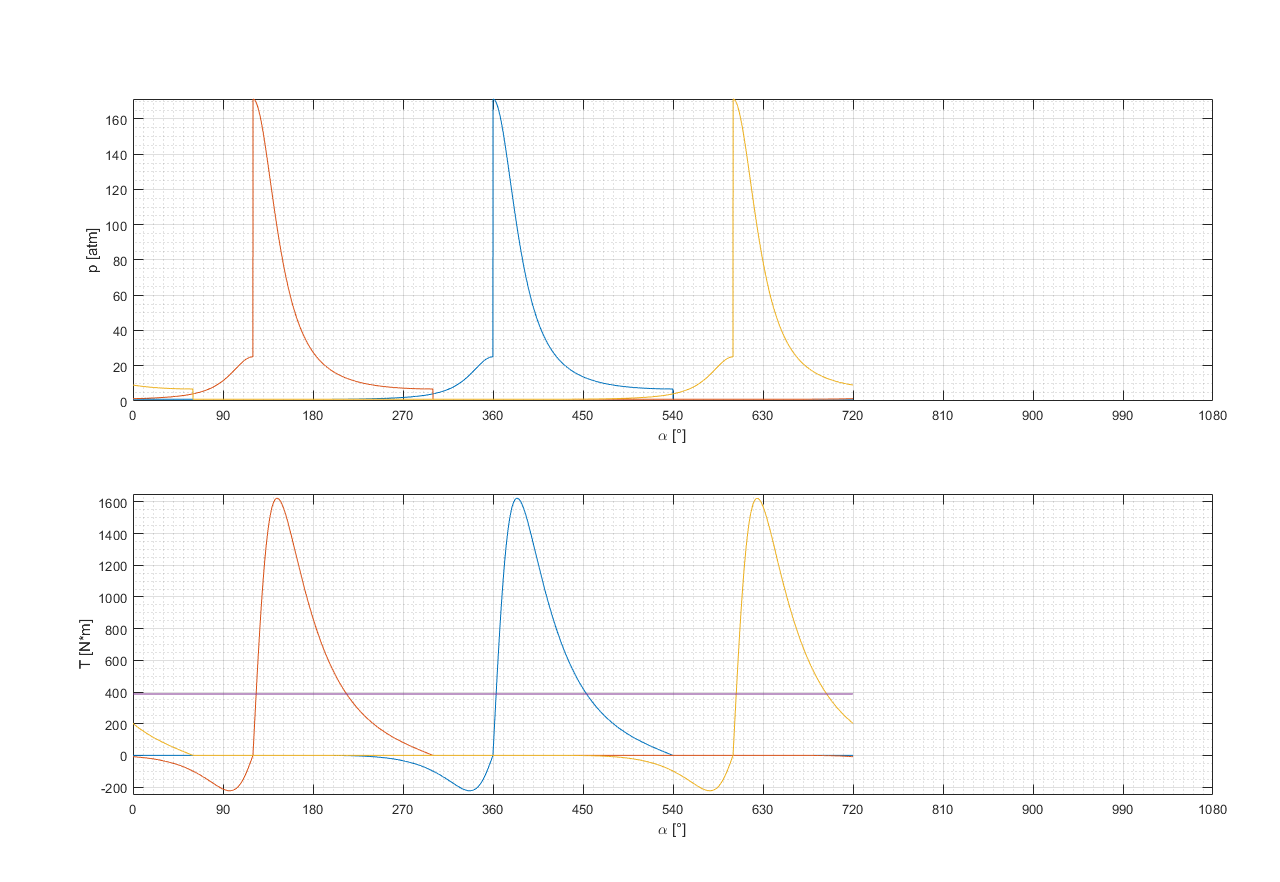
If we put a 2/3 gear set on the shaft
we get an engine with the same output characteristics, the same mean torque, the same three cycles with the same displacement as the single rotor engine.
In the end, the 13B engine has an unitary displacement of 654.7 cm³ and a total displacement of 3928.2 cm³.
If we run it at 9000 rpm, we can compare it with a six-cylinder 3928.2 cm³ running at 6000 rpm.
Kenichi Yamamoto was an engineer that developed Mazda Wankel engines. From his book "ROTARY ENGINE" (1971)
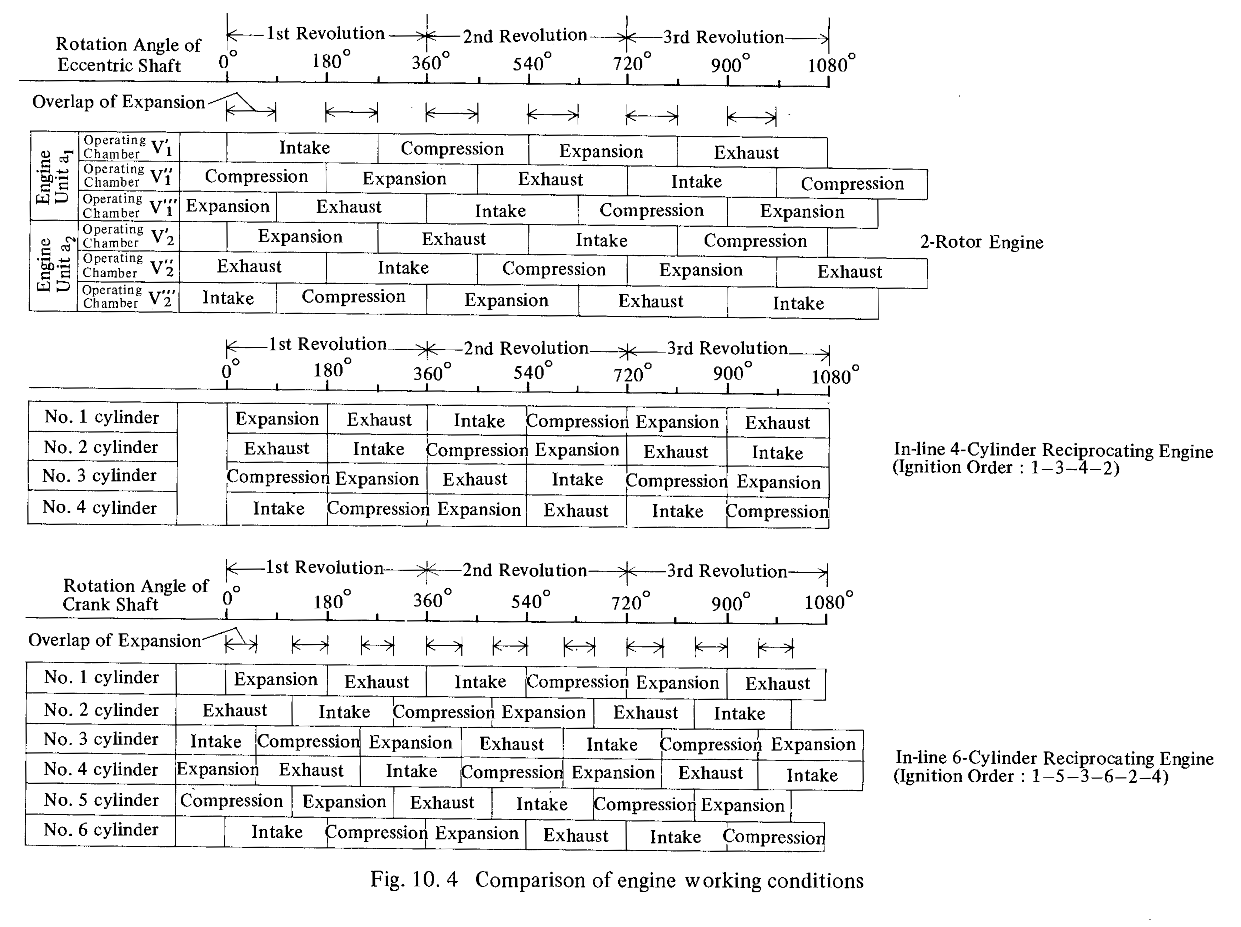
we can see how the 13B engine is like a six-cylinder with a gear set on it. Firing order aside, of course.
Karl Ludvigsen is an automotive journalist. In his article "How Big Are Wankel Engines" (2003) he told how NSU in the first place lied about the displacement of Wankel engines.
Karl Ludvigsen - Hemmings articles
Drawings of engines are taken from wikipedia gifs.
English is not my main language. Sorry for any mistakes.
The volume of the working chamber cyclically varies between a maximum and a minimum. If during the cycle the volume varies in four phases, the engine is known as four-stroke engine.
The difference between the maximum and the minimum volumes is called swept volume or displacement, and is equal to the amount of fluid operated by the ideal cycle. If in the engine there are multiple chambers, each one carrying its own cycle, the displacement of the single one is called unitary displacement, and the sum of them all is called total displacement.
Displacement of an Otto cycle/engine is not correlated with how many turns the crankshaft does during the cycle. It has to be evaluated identifying the single cycle.
Let's take a three-cylinder four-stroke engine with unitary displacement of 654.7 cm³ and total displacement of 1964.1 cm³.
There are 3 different cycles not in phase one to another. In 2 turns of the crankshaft, each one of the three cycles is completed.
If we put a gear train with gear ratio=2/3 after the crankshaft, the "new output shaft" does 3 turns to complete the cycles. But, even if we don't know that the 2/3 gear train is there, we rate the engine 1964.1 cm³ anyway.
This to show that displacement has nothing to do with how many turns the shaft does during the cycle.
Now let's take a Wankel engine with only a single rotor with the 13B geometry.
There are 3 different cycles not in phase one to another, one for each face of the rotor. It takes 3 turns of the crankshaft to complete the cyles. The unitary displacement is 654.7 cm³, and the total displacement is 1964.1 cm³.
Taking ideal Otto cycles, no mechanical or fluid friction, in the first graph is shown the pressure of the cycles as the crankshaft rotates. In the second graph is shown the torque generated by the cycles as the crankshaft rotates. Blue curve is face 1, orange is 2, yellow is 3. Purple line is the mean total torque.
Back to the three-cylinder engine. Blue curve is cylinder 1, orange is 2, yellow is 3. Purple line is the mean total torque.
If we put a 2/3 gear set on the shaft
we get an engine with the same output characteristics, the same mean torque, the same three cycles with the same displacement as the single rotor engine.
In the end, the 13B engine has an unitary displacement of 654.7 cm³ and a total displacement of 3928.2 cm³.
If we run it at 9000 rpm, we can compare it with a six-cylinder 3928.2 cm³ running at 6000 rpm.
Kenichi Yamamoto was an engineer that developed Mazda Wankel engines. From his book "ROTARY ENGINE" (1971)
we can see how the 13B engine is like a six-cylinder with a gear set on it. Firing order aside, of course.
Karl Ludvigsen is an automotive journalist. In his article "How Big Are Wankel Engines" (2003) he told how NSU in the first place lied about the displacement of Wankel engines.
Karl Ludvigsen - Hemmings articles
Drawings of engines are taken from wikipedia gifs.
English is not my main language. Sorry for any mistakes.
Last edited by edoardo; Dec 26, 2023 at 12:15 PM. Reason: restored link

Registered
Joined: Feb 2019
Posts: 326
Likes: 69
Originally Posted by linked article
One chamber was defined as "Geometric Displacement", two were "Equivalent Displacement" and three were "Thermodynamic Displacement".
Geometric Displacement = 1.3L
Equivalent Displacement = 2.6L
Thermodynamic Displacement = 4L
1.3L looks good for marketing and tax purposes (most places don't look as favorably on displacement as the US does). 2.6L is what I recall the racing classification has it at, and there's the why. Compared to an equivalent displacement inline-six, it doesn't stack up very well on paper. It's apples and oranges though. There are things other than paper, and those that have experienced it understand the joy of rapid and linear power delivery up to a high rpm.
Last edited by spectre6000; Nov 18, 2022 at 09:06 AM.

yeah, it seems like Poindexter listed total geometric displacement for a 20B.
but the torque pulse/fluctuation cycles are similar to a 6-cyl engine, it’s well documented in Mazda papers since forever
page 41 in Yamamoto Kenichi’s “Rotary Engine” book
.
but the torque pulse/fluctuation cycles are similar to a 6-cyl engine, it’s well documented in Mazda papers since forever
page 41 in Yamamoto Kenichi’s “Rotary Engine” book
.
Last edited by TeamRX8; Nov 18, 2022 at 10:21 AM.


Thread Starter
Registered
Joined: Nov 2022
Posts: 6
Likes: 1
Unitary displacement = 0.7L
Geometric Displacement = 1.3L
Equivalent Displacement = 2.6L
Thermodynamic Displacement = 4L
1.3L looks good for marketing and tax purposes (most places don't look as favorably on displacement as the US does). 2.6L is what I recall the racing classification has it at, and there's the why. Compared to an equivalent displacement inline-six, it doesn't stack up very well on paper. It's apples and oranges though. There are things other than paper, and those that have experienced it understand the joy of rapid and linear power delivery up to a high rpm.
The four-cylinder 2618.8 cm³ analogy is misleading. Because of the different torque characteristics and cycle frequency.
I added the total torque in black.
13B engine. Let crankshaft speed be 9000 rpm. Frequency of the Otto cycles is 50 Hz. Power and torque are 487.3 kW and 517.0 N*m.
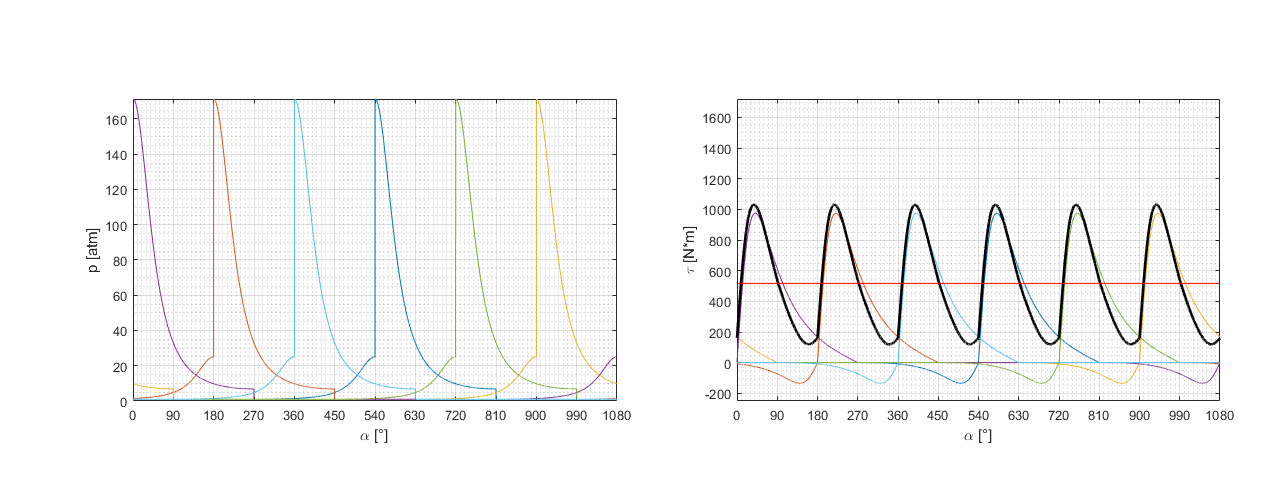
Four-cylinder 2618.8 cm³. Let crankshaft speed be 9000 rpm. Frequency of the Otto cycles is 75 Hz. Power and torque are 487.3 kW and 517.0 N*m.
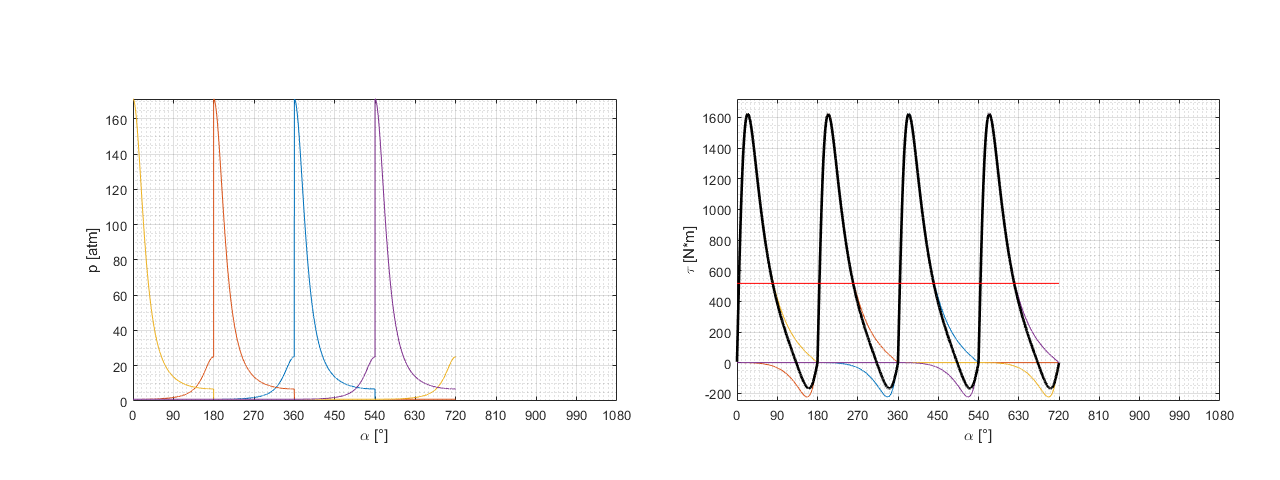
Six-cylinder 3928.2 cm³. Let crankshaft speed be 6000 rpm. Frequency of the Otto cycles is 50 Hz. Power and torque are 487.3 kW and 775.6 N*m.
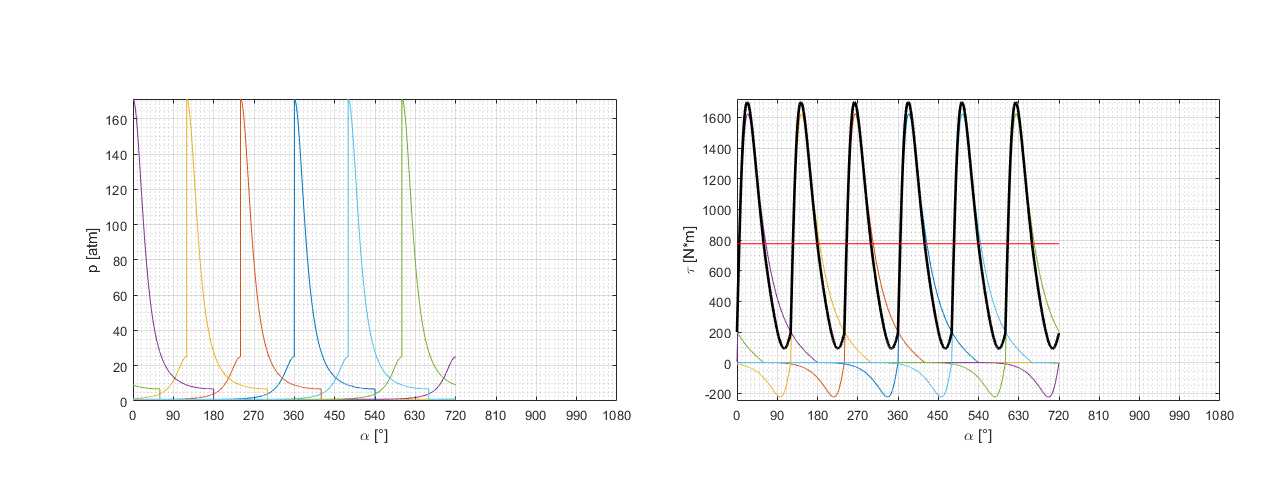
Six-cylinder 3928.2 cm³. Let crankshaft speed be 6000 rpm. Put after the crankshaft a 2/3 gear ratio. The "new output shaft" speed is 9000 rpm. Frequency of the Otto cycles is 50 Hz. Power and torque are 487.3 kW and 517.0 N*m.
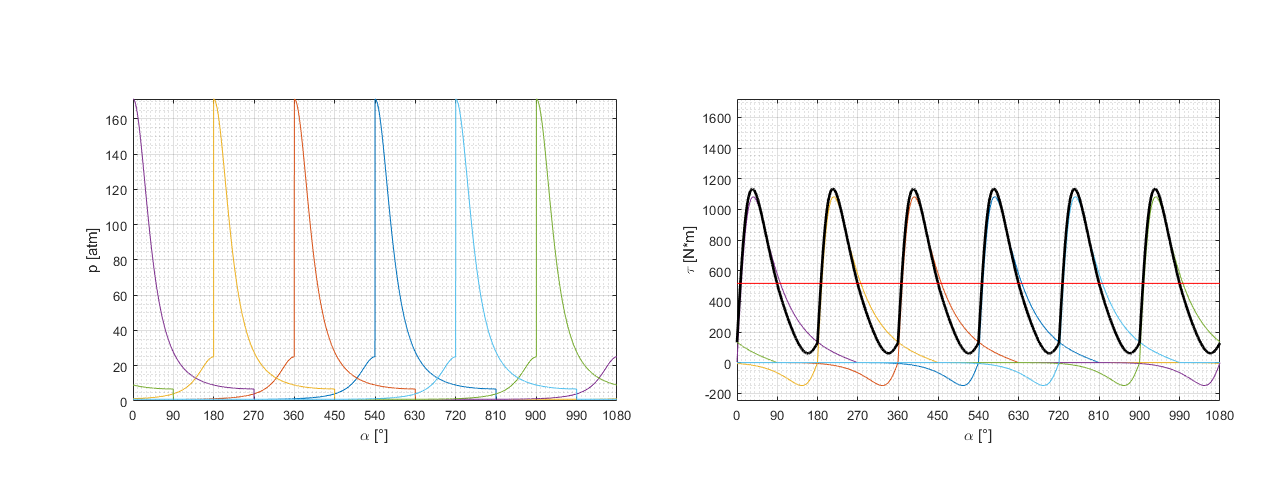
The points are two: to show that the 13B engine has a displacement of 3928.2 cm³ and that it can be seen as a six-cylinder with a gear set on it.
I don't like misleading information, whether it's due to Mazda economical interests or people ignorance.
As I wrote here https://www.rx8club.com/new-member-forum-197/hi-274455/ a person suggested me to present the argument on this forum.

OK. You realize this info is at least 40 years old right? It's been through FIA review in the late 80s when Mazda got into LeMans. It also largely a semantic argument based on how you want to measure displacement in such an engine.
Thread Starter
Registered
Joined: Nov 2022
Posts: 6
Likes: 1
At the time, IMSA regulation listed RX-7 as 2.6 L, so counting two faces of each rotor.
Definition and measurement of displacement of internal combustion engines is not up to debate. You identify the thermodinamic cycles that take place in it, and sum the volume of working fluid that each one operates. It doesn't depend on the geometry of the engine, which is simply a machine that by means of a changing volume chamber realizes an ideal thermodinamic cycle.
It's thermodynamics applied to machines. A long-standing and consolidated discipline.

You can google for FIA engine ruled on your own. The 2021 regs state in section 1.13 "In the case of the rotary engine, the engine cubic capacity is the volume determined by the difference between maximum and minimum capacities of the combustion chambers".
So yes, they agree with you about using all chambers. As they did in the 80s.
I think you're misunderstanding your own thesis. The differences in displacement measurement comes from the time component. In a piston engine the displacement is scoped to a single revolution. In a wankel, not all of the displacement is used in a single revolution, so counting all volume also isn't a fair comparison. For reasons only Mazda knows they decided to market the engine based on the displacement used in a single ignition cycle. What do you want to happen here? Have everyone switched to your preferred method of measurement? Sue Mazda for their choice of measurement or marketing material? Get a gold star for the research?
So yes, they agree with you about using all chambers. As they did in the 80s.
I think you're misunderstanding your own thesis. The differences in displacement measurement comes from the time component. In a piston engine the displacement is scoped to a single revolution. In a wankel, not all of the displacement is used in a single revolution, so counting all volume also isn't a fair comparison. For reasons only Mazda knows they decided to market the engine based on the displacement used in a single ignition cycle. What do you want to happen here? Have everyone switched to your preferred method of measurement? Sue Mazda for their choice of measurement or marketing material? Get a gold star for the research?
Registered
Joined: Feb 2019
Posts: 326
Likes: 69
Sometimes nerds gotta nerd. I appreciate the effort and information as it has been presented. I knew there was some weirdness re: displacement between advertised displacement and racing regs, but never had the time to matlab it. Makes sense. It's a great little engine!

“Whale-oil-beef-hooked”
Joined: May 2020
Posts: 596
Likes: 1,290
From: Delta, British Columbia

Thread Starter
Registered
Joined: Nov 2022
Posts: 6
Likes: 1
You can google for FIA engine ruled on your own. The 2021 regs state in section 1.13 "In the case of the rotary engine, the engine cubic capacity is the volume determined by the difference between maximum and minimum capacities of the combustion chambers".
So yes, they agree with you about using all chambers. As they did in the 80s.
I think you're misunderstanding your own thesis. The differences in displacement measurement comes from the time component. In a piston engine the displacement is scoped to a single revolution. In a wankel, not all of the displacement is used in a single revolution, so counting all volume also isn't a fair comparison. For reasons only Mazda knows they decided to market the engine based on the displacement used in a single ignition cycle. What do you want to happen here? Have everyone switched to your preferred method of measurement? Sue Mazda for their choice of measurement or marketing material? Get a gold star for the research?
So yes, they agree with you about using all chambers. As they did in the 80s.
I think you're misunderstanding your own thesis. The differences in displacement measurement comes from the time component. In a piston engine the displacement is scoped to a single revolution. In a wankel, not all of the displacement is used in a single revolution, so counting all volume also isn't a fair comparison. For reasons only Mazda knows they decided to market the engine based on the displacement used in a single ignition cycle. What do you want to happen here? Have everyone switched to your preferred method of measurement? Sue Mazda for their choice of measurement or marketing material? Get a gold star for the research?
I find 1969 and 1982 rules:
https://www.fia.com/file/6308/download?token=WUOek4is
https://historicdb.fia.com/sites/def...tion_rules.pdf
"twice the volume determined by the difference between the maximum and minimum capacity of the working chamber". So, counting two faces of each rotor.
No need to introduce time. It will only make things more difficult.
Maybe there's a language barrier here.
To displace (to swept) the unitary volume, a single-cylinder engine takes 1/2 turns of the crankshaft, and a single face of the 13B engine takes 3/4 turns of the crankshaft.
To complete a cycle (worth noting the difference between thermodynamic cycle and thermodynamic process) four consecutive of this actions are needed. So for a piston engine 2 crankshaft turns, and for a 13B engine 3 crankshaft turns. Note that, as one cycle complete (one cylinder in a multi-cylinder engine, or one face in a 13B engine), the same its brothers do. So unitary volume (displacement) of each chamber add up.
The six different cycles that occour in a 13B engine during three crankshaft turns are like six equal functions, with the same frequency but different phases. Like three-phase electric systems.
I don't want to make you all my proselytes, nor sue Mazda, nor get a medal. I simply want to expose my argument, and respond to counterarguments or clarifications.
Last edited by edoardo; Nov 19, 2022 at 09:53 AM.
I think introducing thermodynamic process into this indirectly introduces time (in rotations) to your math. Displacement proper has no time, and your idea that all chambers should be summed is right. But if the goal is to compare different engines, then you have to introduce other variables that make them different - like volume displaced per rotation, or rotations to complete a thermodynamic cycle.
If you're a governing body like FIA who cares about allowing wankels to compete fairly, you probably care more about displacement as a proxy for capacity to convert fuel to power over the course of a race, so summing all chambers is fine.
If you're a safety governing body who cares about displacement as a proxy for peak power production, you probably want the middle option (in fact some insurance companies and governments count the RX8 as a 2.6L).
If you're Mazda and you want to sell your engine as a 1.3L, there's a defensible way to measure that.
Displacement is piston concept that translates poorly to other engines (steam? turbine? rotary? oval piston? opposing piston?), so I think what you perceive as misinformation in your first post, is a conveniently chosen adaptation of the concept at worst, a best suitable approximate at best.
If you're a governing body like FIA who cares about allowing wankels to compete fairly, you probably care more about displacement as a proxy for capacity to convert fuel to power over the course of a race, so summing all chambers is fine.
If you're a safety governing body who cares about displacement as a proxy for peak power production, you probably want the middle option (in fact some insurance companies and governments count the RX8 as a 2.6L).
If you're Mazda and you want to sell your engine as a 1.3L, there's a defensible way to measure that.
Displacement is piston concept that translates poorly to other engines (steam? turbine? rotary? oval piston? opposing piston?), so I think what you perceive as misinformation in your first post, is a conveniently chosen adaptation of the concept at worst, a best suitable approximate at best.
Last edited by Loki; Nov 19, 2022 at 10:29 AM.
Thread Starter
Registered
Joined: Nov 2022
Posts: 6
Likes: 1
I think introducing thermodynamic process into this indirectly introduces time (in rotations) to your math. Displacement proper has no time, and your idea that all chambers should be summed is right. But if the goal is to compare different engines, then you have to introduce other variables that make them different - like volume displaced per rotation, or rotations to complete a thermodynamic cycle.
Displacement is piston concept that translates poorly to other engines (steam? turbine? rotary? oval piston? opposing piston?), so I think what you perceive as misinformation in your first post, is a conveniently chosen adaptation of the concept at worst, a best suitable approximate at best.
You are right, I did included time and shaft revolution per cycle in the math. I reported frequency and power, physical dimensions that intrinsically require time. They are needed to make the data more clear, but I think that including them in the text makes the discourse unnecessarily confusing.
Turbines are machines that rely on continuous cycle. Cylinder, oval, wankel engine rely on discrete/finite cycle. Displacement has no meaning for the former, but it has for the latter.
Turbines are machines that rely on continuous cycle. Cylinder, oval, wankel engine rely on discrete/finite cycle. Displacement has no meaning for the former, but it has for the latter.

Thread
Thread Starter
Forum
Replies
Last Post