


replace parts or go straight for compression?


Thread Starter
Love it when she whines
Joined: Oct 2010
Posts: 182
Likes: 0
From: Iowa City, Iowa
replace parts or go straight for compression?
i have a 2005, roughly 57,xxx miles. the problem here are the MPG's, i cant seem to get above 14-15 with mixed driving, generally i would say 70% highway, 30% city. all highway i can get about 21-22, the second i do any bit of city/mixed driving it drops straight down again.
right this second im about to hit a half tank and i have gone 58 miles
to sum it up, the car starts great when cold. when it is warmed up it sometimes starts right away, others it may crank for 4-5 seconds. i bought the car mid last summer with 50,000, i do not know if the coils/plugs/wires were changed by the previous owner although the engine drives great and feels like it has lost no power. i attempted to check the maf, i didnt have much time so i just pealed up the top and looked with a flash light. hard to see with the screen but it seemed pretty clean. car has a brand new catalytic converter, was replaced under warranty a couple months ago, although i saw no improvement once that was replaced.
i will do a red line pull 2-3 times every tank of gas other than that, generally low shifts keeping it between 3-3.5k. other than that everything is pretty standard. awlays warms up before driving, goes through about a 3/4 q of oil every 3,000.
now for the question, should i bother saving up, replacing the ignition system with the BHR, pull the maf and clean it. or just go straight for the compression test?
ideas....
right this second im about to hit a half tank and i have gone 58 miles
to sum it up, the car starts great when cold. when it is warmed up it sometimes starts right away, others it may crank for 4-5 seconds. i bought the car mid last summer with 50,000, i do not know if the coils/plugs/wires were changed by the previous owner although the engine drives great and feels like it has lost no power. i attempted to check the maf, i didnt have much time so i just pealed up the top and looked with a flash light. hard to see with the screen but it seemed pretty clean. car has a brand new catalytic converter, was replaced under warranty a couple months ago, although i saw no improvement once that was replaced.
i will do a red line pull 2-3 times every tank of gas other than that, generally low shifts keeping it between 3-3.5k. other than that everything is pretty standard. awlays warms up before driving, goes through about a 3/4 q of oil every 3,000.
now for the question, should i bother saving up, replacing the ignition system with the BHR, pull the maf and clean it. or just go straight for the compression test?
ideas....
Last edited by 9kBeep; Jan 25, 2011 at 03:41 PM.

I'm confused about your comment on the maf. Which screen are you talking about? The maf sensor is on the accordian tube connecting the air box to the throttle body. Check this thread
Also, if you're unsure about coils/ plugs, you should take them out and check them. If they look fouled, order a new set (BHR sounds good). OEM plugs/ coils tend to wear around 25k miles...
May also want to check your eccentric shaft sensor while you're at it.
Save compression test for last, imo
Also, if you're unsure about coils/ plugs, you should take them out and check them. If they look fouled, order a new set (BHR sounds good). OEM plugs/ coils tend to wear around 25k miles...
May also want to check your eccentric shaft sensor while you're at it.
Save compression test for last, imo

I would check for the following:
- Does it have the upgraded starter? This would solve your 4-5 seconds crank starts
- Is your MAF clean?
- When was the last time plugs and coils were changed?
- Decarbon the engine
- Has the car been flashed recently. You want to make sure that MSP16 was done.
As far as your gas consumption I think it is fine. Anything from 13 to 17 for city driving sounds fine and anything around 20 for highway is normal.
- Does it have the upgraded starter? This would solve your 4-5 seconds crank starts
- Is your MAF clean?
- When was the last time plugs and coils were changed?
- Decarbon the engine
- Has the car been flashed recently. You want to make sure that MSP16 was done.
As far as your gas consumption I think it is fine. Anything from 13 to 17 for city driving sounds fine and anything around 20 for highway is normal.

Registered
Joined: Aug 2006
Posts: 5,027
Likes: 5
From: Northern Virginia
It's a shame that a compression test on an 8 is expensive. Standard practice used to be to do a compression test before before throwing parts and money into an engine.
But at $100 and being a dealer-only thing, I guess times have changed.
Ken
But at $100 and being a dealer-only thing, I guess times have changed.
Ken

Thread Starter
Love it when she whines
Joined: Oct 2010
Posts: 182
Likes: 0
From: Iowa City, Iowa
I'm confused about your comment on the maf. Which screen are you talking about? The maf sensor is on the accordian tube connecting the air box to the throttle body. Check this thread
Also, if you're unsure about coils/ plugs, you should take them out and check them. If they look fouled, order a new set (BHR sounds good). OEM plugs/ coils tend to wear around 25k miles...
May also want to check your eccentric shaft sensor while you're at it.
Save compression test for last, imo
Also, if you're unsure about coils/ plugs, you should take them out and check them. If they look fouled, order a new set (BHR sounds good). OEM plugs/ coils tend to wear around 25k miles...
May also want to check your eccentric shaft sensor while you're at it.
Save compression test for last, imo
(i read up on the thread you provided and that is much easier than i thought it would be, thank you so much. i have read ofoil being blown from the throttle body into the intake pipe so i assumed i would see oil chunks and residue on the maf which would give it away that its dirty.)
i will also check the coils and see how they look.
could i also have a general pointer to where the eccentric shaft is?
I would check for the following:
- Does it have the upgraded starter? This would solve your 4-5 seconds crank starts
- Is your MAF clean?
- When was the last time plugs and coils were changed?
- Decarbon the engine
- Has the car been flashed recently. You want to make sure that MSP16 was done.
As far as your gas consumption I think it is fine. Anything from 13 to 17 for city driving sounds fine and anything around 20 for highway is normal.
- Does it have the upgraded starter? This would solve your 4-5 seconds crank starts
- Is your MAF clean?
- When was the last time plugs and coils were changed?
- Decarbon the engine
- Has the car been flashed recently. You want to make sure that MSP16 was done.
As far as your gas consumption I think it is fine. Anything from 13 to 17 for city driving sounds fine and anything around 20 for highway is normal.
i couldnt decide if $100 was a lot or not? i know of nothing to compare it to so i THOUGHT it seemed reasonable. especially if the dealer does decide the numbers pulled are to far from mazda spec, then its free and you get a new engine!!
Last edited by 9kBeep; Jan 26, 2011 at 06:46 AM.

Registered User
Joined: Dec 2010
Posts: 25
Likes: 0
I paid $150 for my compression test which showed low so $100 sounds like a deal. I have all the same symptoms as you. I cleaned the MAF, replaced the coils, plugs, & wires, but still all the same symptoms. One additional symptom is at high rpm I lose power and the CEL comes on with random misfire. In my case, after the compression test, dealer said we would need to replace the coils, wires, and plugs before dealing with the engine. I did it myself because the dealer wanted $650 to do the work and it really is easy by following the DIY's here. It cost me just over $300 for the parts and 1-2 hours of my time.
Anyway, took it back in to the dealer yesterday with maintenance history. They've faxed them to MNAO and now waiting on whether they will agree to replace the engine under warrenty. Not sure why it takes them so long. While I have good records from previous owner I'm missing at least 3 oil changes with no documentation. It's an '04 with 54k miles.
Anyway, took it back in to the dealer yesterday with maintenance history. They've faxed them to MNAO and now waiting on whether they will agree to replace the engine under warrenty. Not sure why it takes them so long. While I have good records from previous owner I'm missing at least 3 oil changes with no documentation. It's an '04 with 54k miles.

kevin@rotaryresurrection
iTrader: (3)
Joined: Feb 2005
Posts: 1,415
Likes: 61
From: east of Knoxville, TN
You can easily do your own compression test with a standard piston engine compression test gauge available at any auto parts store for about $25.
IT's true that the rotary has a common chamber where each face should ideally be measured individually, which requires a custom made tester like the mazda unit. However, in general each face will be within a few psi of the others in a common chamber. All seals wear across the same surfaces and are the same age, thus overall wear and sealing will be very similar between the 3 faces. The only time this is untrue is when a seal is cracked or broken. In that case the engine would not run or would run so poorly that you'd know there was a more major problem.
Assuming that we're not testing for broken/cracked seals, we just want an idea of the compression in each chamber. A piston tester cannot differentiate between the 3 faces in each common chamber, instead it will simply report the highest value face in that chamber. But again we can assume that the other faces are going to be the same as, or just lower than, that highest value. This will give us a very good idea of the overall state of the engine's compression.
So simply get a piston engine compression tester, run the engine until full operating temperature, remove both trailing sparkplugs, and unplug the crank angle sensor. Ideally you want the throttle to be open, but as far as I can tell the DBW throttlebody in this car will not open/respond normally when you depress the gas pedal during cranking, so I have resorted to finding ways of holding it partially open manually. This is not a requirement but it will influence the test results by about 10% or so.
Once you're ready to test with the gauge inserted on one chamber's open plug hole, get in and crank the engine for 5-10 seconds. Note reading. REpeat for other chamber. It's normal (although not desirable) for the rear chamber to read 5-10% lower than the front...the rear always wears out faster.
115+psi is excellent. 105-115psi is healthy. 95-105 is average/getting weak. 95 and below is very weak and will start to have significant starting, idling, and stalling issues. 96-97psi is mazda's borderline value for lowest acceptable compression in a "good" engine.
Should you want to take it a step further, you can have an assistant crank the car for you while you hold in the valve on the side of the tester...this will allow the unit to constantly vent some air, having the effect of the needle bouncing for each face/compression event in the common chamber. IF the needle bounces to the same exact value each time (the value/number itself will not be accurate, you are only concerned with the needle bouncing position for comparison purposes) then you know each face is very close in compression. Should you have a larger variation or skips in the compression bounces you know there is a more major seal issue that means the engine has already failed and must come apart.
IT's true that the rotary has a common chamber where each face should ideally be measured individually, which requires a custom made tester like the mazda unit. However, in general each face will be within a few psi of the others in a common chamber. All seals wear across the same surfaces and are the same age, thus overall wear and sealing will be very similar between the 3 faces. The only time this is untrue is when a seal is cracked or broken. In that case the engine would not run or would run so poorly that you'd know there was a more major problem.
Assuming that we're not testing for broken/cracked seals, we just want an idea of the compression in each chamber. A piston tester cannot differentiate between the 3 faces in each common chamber, instead it will simply report the highest value face in that chamber. But again we can assume that the other faces are going to be the same as, or just lower than, that highest value. This will give us a very good idea of the overall state of the engine's compression.
So simply get a piston engine compression tester, run the engine until full operating temperature, remove both trailing sparkplugs, and unplug the crank angle sensor. Ideally you want the throttle to be open, but as far as I can tell the DBW throttlebody in this car will not open/respond normally when you depress the gas pedal during cranking, so I have resorted to finding ways of holding it partially open manually. This is not a requirement but it will influence the test results by about 10% or so.
Once you're ready to test with the gauge inserted on one chamber's open plug hole, get in and crank the engine for 5-10 seconds. Note reading. REpeat for other chamber. It's normal (although not desirable) for the rear chamber to read 5-10% lower than the front...the rear always wears out faster.
115+psi is excellent. 105-115psi is healthy. 95-105 is average/getting weak. 95 and below is very weak and will start to have significant starting, idling, and stalling issues. 96-97psi is mazda's borderline value for lowest acceptable compression in a "good" engine.
Should you want to take it a step further, you can have an assistant crank the car for you while you hold in the valve on the side of the tester...this will allow the unit to constantly vent some air, having the effect of the needle bouncing for each face/compression event in the common chamber. IF the needle bounces to the same exact value each time (the value/number itself will not be accurate, you are only concerned with the needle bouncing position for comparison purposes) then you know each face is very close in compression. Should you have a larger variation or skips in the compression bounces you know there is a more major seal issue that means the engine has already failed and must come apart.
Registered User
Joined: Dec 2010
Posts: 25
Likes: 0
Mazda finally got back with a yes that they will replace my engine. Wish I didn't have to get a new engine but very pleased with Mazda that they are devoted to taking care of customers with this issue. I plan to have them replace the motor mounts and check/replace the OMP lines. Any other suggestions?
RotoryResurrection - From what I've read in other posts one needs to know the RPM of the engine to really accurately interpret a compression reading. I'm not sure how that would be possible with your method. Well, maybe possible, but difficult...
9kbeep - If you think there is a compression problem, which from your symptoms I'm inclined to believe you do, I would just take it to the dealership since MNAO is only going to accept their results. I think RotoryResurrection's method would really only be good if the reading you came up with was really high which I suspect won't be the case with your vehicle.
RotoryResurrection - From what I've read in other posts one needs to know the RPM of the engine to really accurately interpret a compression reading. I'm not sure how that would be possible with your method. Well, maybe possible, but difficult...
9kbeep - If you think there is a compression problem, which from your symptoms I'm inclined to believe you do, I would just take it to the dealership since MNAO is only going to accept their results. I think RotoryResurrection's method would really only be good if the reading you came up with was really high which I suspect won't be the case with your vehicle.
kevin@rotaryresurrection
iTrader: (3)
Joined: Feb 2005
Posts: 1,415
Likes: 61
From: east of Knoxville, TN

The cranking rpm is relevant, but not super-important. As long as you are turning at normal cranking speed (225-250rpm) you are fine. Cranking rpm and altitude both play a role in compression results but they have minimal effect unless those variables are excessively out of usual range (very slow cranking due to dead battery, very high altitude).

#50
Joined: Nov 2007
Posts: 7,521
Likes: 11
From: Caput Mundi
To the OP: i'd just get a compression test done after cleaning the MAF. It's always good to know how long your engine's got to live.
If the test's ok then you'd be off to changing parts, if the test turns out bad... new engine and then the eventually needed parts.
Thread Starter
Love it when she whines
Joined: Oct 2010
Posts: 182
Likes: 0
From: Iowa City, Iowa
You can easily do your own compression test with a standard piston engine compression test gauge available at any auto parts store for about $25.
IT's true that the rotary has a common chamber where each face should ideally be measured individually, which requires a custom made tester like the mazda unit. However, in general each face will be within a few psi of the others in a common chamber. All seals wear across the same surfaces and are the same age, thus overall wear and sealing will be very similar between the 3 faces. The only time this is untrue is when a seal is cracked or broken. In that case the engine would not run or would run so poorly that you'd know there was a more major problem.
Assuming that we're not testing for broken/cracked seals, we just want an idea of the compression in each chamber. A piston tester cannot differentiate between the 3 faces in each common chamber, instead it will simply report the highest value face in that chamber. But again we can assume that the other faces are going to be the same as, or just lower than, that highest value. This will give us a very good idea of the overall state of the engine's compression.
So simply get a piston engine compression tester, run the engine until full operating temperature, remove both trailing sparkplugs, and unplug the crank angle sensor. Ideally you want the throttle to be open, but as far as I can tell the DBW throttlebody in this car will not open/respond normally when you depress the gas pedal during cranking, so I have resorted to finding ways of holding it partially open manually. This is not a requirement but it will influence the test results by about 10% or so.
Once you're ready to test with the gauge inserted on one chamber's open plug hole, get in and crank the engine for 5-10 seconds. Note reading. REpeat for other chamber. It's normal (although not desirable) for the rear chamber to read 5-10% lower than the front...the rear always wears out faster.
115+psi is excellent. 105-115psi is healthy. 95-105 is average/getting weak. 95 and below is very weak and will start to have significant starting, idling, and stalling issues. 96-97psi is mazda's borderline value for lowest acceptable compression in a "good" engine.
Should you want to take it a step further, you can have an assistant crank the car for you while you hold in the valve on the side of the tester...this will allow the unit to constantly vent some air, having the effect of the needle bouncing for each face/compression event in the common chamber. IF the needle bounces to the same exact value each time (the value/number itself will not be accurate, you are only concerned with the needle bouncing position for comparison purposes) then you know each face is very close in compression. Should you have a larger variation or skips in the compression bounces you know there is a more major seal issue that means the engine has already failed and must come apart.
IT's true that the rotary has a common chamber where each face should ideally be measured individually, which requires a custom made tester like the mazda unit. However, in general each face will be within a few psi of the others in a common chamber. All seals wear across the same surfaces and are the same age, thus overall wear and sealing will be very similar between the 3 faces. The only time this is untrue is when a seal is cracked or broken. In that case the engine would not run or would run so poorly that you'd know there was a more major problem.
Assuming that we're not testing for broken/cracked seals, we just want an idea of the compression in each chamber. A piston tester cannot differentiate between the 3 faces in each common chamber, instead it will simply report the highest value face in that chamber. But again we can assume that the other faces are going to be the same as, or just lower than, that highest value. This will give us a very good idea of the overall state of the engine's compression.
So simply get a piston engine compression tester, run the engine until full operating temperature, remove both trailing sparkplugs, and unplug the crank angle sensor. Ideally you want the throttle to be open, but as far as I can tell the DBW throttlebody in this car will not open/respond normally when you depress the gas pedal during cranking, so I have resorted to finding ways of holding it partially open manually. This is not a requirement but it will influence the test results by about 10% or so.
Once you're ready to test with the gauge inserted on one chamber's open plug hole, get in and crank the engine for 5-10 seconds. Note reading. REpeat for other chamber. It's normal (although not desirable) for the rear chamber to read 5-10% lower than the front...the rear always wears out faster.
115+psi is excellent. 105-115psi is healthy. 95-105 is average/getting weak. 95 and below is very weak and will start to have significant starting, idling, and stalling issues. 96-97psi is mazda's borderline value for lowest acceptable compression in a "good" engine.
Should you want to take it a step further, you can have an assistant crank the car for you while you hold in the valve on the side of the tester...this will allow the unit to constantly vent some air, having the effect of the needle bouncing for each face/compression event in the common chamber. IF the needle bounces to the same exact value each time (the value/number itself will not be accurate, you are only concerned with the needle bouncing position for comparison purposes) then you know each face is very close in compression. Should you have a larger variation or skips in the compression bounces you know there is a more major seal issue that means the engine has already failed and must come apart.
i new rpm was a factor but i assumed like you said, that the starter was operating at normal speeds which im pretty sure it is, shows no sign of struggle when turning over. just the engine itself.
How do you track the rpms?
To the OP: i'd just get a compression test done after cleaning the MAF. It's always good to know how long your engine's got to live.
If the test's ok then you'd be off to changing parts, if the test turns out bad... new engine and then the eventually needed parts.
To the OP: i'd just get a compression test done after cleaning the MAF. It's always good to know how long your engine's got to live.
If the test's ok then you'd be off to changing parts, if the test turns out bad... new engine and then the eventually needed parts.
side question, i read the DIY on the MAF cleaning. did i mistakenly read to use "contact cleaner" as in prescription contacts for your eyes? lol, and ifso where could i buy a small spray bottle of that?

Registered
Joined: Jan 2010
Posts: 3,487
Likes: 3
From: Omaha, NE
Thread Starter
Love it when she whines
Joined: Oct 2010
Posts: 182
Likes: 0
From: Iowa City, Iowa
Most mechanics use electrical contact cleaner or brake disc cleaner - something that will not leave an oily residue.
....and make sure you clean it right - the maf is not that little brown bulb hanging down, it's a set of fine wires up in the body of the sensor.
and don't touch them.
....and make sure you clean it right - the maf is not that little brown bulb hanging down, it's a set of fine wires up in the body of the sensor.
and don't touch them.

But any electrical contact cleaner will do
kevin@rotaryresurrection
iTrader: (3)
Joined: Feb 2005
Posts: 1,415
Likes: 61
From: east of Knoxville, TN
How do you track the rpms?
To the OP: i'd just get a compression test done after cleaning the MAF. It's always good to know how long your engine's got to live.
If the test's ok then you'd be off to changing parts, if the test turns out bad... new engine and then the eventually needed parts.
To the OP: i'd just get a compression test done after cleaning the MAF. It's always good to know how long your engine's got to live.
If the test's ok then you'd be off to changing parts, if the test turns out bad... new engine and then the eventually needed parts.
We know from experience that an engine with a healthy starter and battery cranks at about 225-250rpm. So unless your engine is turning slower than normal (which you would notice if you are "in tune with" your car's normal behavior) or faster than normal (due to a jump start or battery charger on an already-charged battery) then we don't really need to worry with the exact cranking rpm.
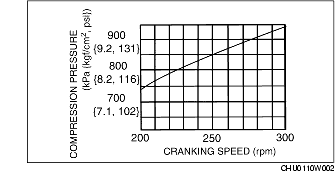
It's true there is a chart for correction of cranking rpm value versus compression measured and actual corrected compression. But unless you are significantly outside the normal 225-250rpm range the compression test results will vary little to none from what you measure.
We're not doing this to get ironclad proof for mazda's engine replacement program. We're doing this to get a cheap/free way to have a general gauge of your engine's standing and longevity without dicking around with the stealership and all that foolishness. Do you take your car to the dealer to add air to the tires, change the oil, or change the plugs? No need to do so for a simple compression test either, unless you are trying to get an engine replaced under warranty.
#50
Joined: Nov 2007
Posts: 7,521
Likes: 11
From: Caput Mundi
You don't need to.
We know from experience that an engine with a healthy starter and battery cranks at about 225-250rpm. So unless your engine is turning slower than normal (which you would notice if you are "in tune with" your car's normal behavior) or faster than normal (due to a jump start or battery charger on an already-charged battery) then we don't really need to worry with the exact cranking rpm.
It's true there is a chart for correction of cranking rpm value versus compression measured and actual corrected compression. But unless you are significantly outside the normal 225-250rpm range the compression test results will vary little to none from what you measure.
We're not doing this to get ironclad proof for mazda's engine replacement program. We're doing this to get a cheap/free way to have a general gauge of your engine's standing and longevity without dicking around with the stealership and all that foolishness. Do you take your car to the dealer to add air to the tires, change the oil, or change the plugs? No need to do so for a simple compression test either, unless you are trying to get an engine replaced under warranty.
We know from experience that an engine with a healthy starter and battery cranks at about 225-250rpm. So unless your engine is turning slower than normal (which you would notice if you are "in tune with" your car's normal behavior) or faster than normal (due to a jump start or battery charger on an already-charged battery) then we don't really need to worry with the exact cranking rpm.
It's true there is a chart for correction of cranking rpm value versus compression measured and actual corrected compression. But unless you are significantly outside the normal 225-250rpm range the compression test results will vary little to none from what you measure.
We're not doing this to get ironclad proof for mazda's engine replacement program. We're doing this to get a cheap/free way to have a general gauge of your engine's standing and longevity without dicking around with the stealership and all that foolishness. Do you take your car to the dealer to add air to the tires, change the oil, or change the plugs? No need to do so for a simple compression test either, unless you are trying to get an engine replaced under warranty.
kevin@rotaryresurrection
iTrader: (3)
Joined: Feb 2005
Posts: 1,415
Likes: 61
From: east of Knoxville, TN

#50
Joined: Nov 2007
Posts: 7,521
Likes: 11
From: Caput Mundi
Does it make you feel better to call us (well, me) names?
A compression test is a compression test and MUST be done right. This means using a probe with a known volume to correct the results, rpms etc.
Anyway yes, 50 rpms make A WORLD of difference comrpession wise.
We may be all "know-it-all"s and armchair engineers but you are nothing more than a backyard rebuilder considering what you suggest.
A compression test is a compression test and MUST be done right. This means using a probe with a known volume to correct the results, rpms etc.
Anyway yes, 50 rpms make A WORLD of difference comrpession wise.
We may be all "know-it-all"s and armchair engineers but you are nothing more than a backyard rebuilder considering what you suggest.

All seals wear across the same surfaces and are the same age, thus overall wear and sealing will be very similar between the 3 faces. The only time this is untrue is when a seal is cracked or broken. In that case the engine would not run or would run so poorly that you'd know there was a more major problem.
Takes one to know one, I suppose.
kevin@rotaryresurrection
iTrader: (3)
Joined: Feb 2005
Posts: 1,415
Likes: 61
From: east of Knoxville, TN
Does it make you feel better to call us (well, me) names?
A compression test is a compression test and MUST be done right. This means using a probe with a known volume to correct the results, rpms etc.
Anyway yes, 50 rpms make A WORLD of difference comrpession wise.
We may be all "know-it-all"s and armchair engineers but you are nothing more than a backyard rebuilder considering what you suggest.
A compression test is a compression test and MUST be done right. This means using a probe with a known volume to correct the results, rpms etc.
Anyway yes, 50 rpms make A WORLD of difference comrpession wise.
We may be all "know-it-all"s and armchair engineers but you are nothing more than a backyard rebuilder considering what you suggest.
But, you're right, I've been doing it wrong the entire time. It's unfortunate that I didn't have you here to teach me the correct way sooner.

Oh, if you couldn't tell, that was a joke.

kevin@rotaryresurrection
iTrader: (3)
Joined: Feb 2005
Posts: 1,415
Likes: 61
From: east of Knoxville, TN
Elaborate.
Uhhh...the crank angle sensor/esps is unplugged during a compression test. The PCM isn't trying to unflood anything.
Elaborate based upon your experience, with special emphasis on WHY the renesis would exhibit different wear characteristics than any of the previous 30 years worth of rotary engines built using the same materials.
Not in my experience. And not in everyone else's, either. IF this were true, rx8s would not be showing up at dealerships with difficulty idling and starting, seeking engine replacements, with compression in the mid 90's, just shy of mazda's revised (for the renesis) compression guidelines.
And yet here you are right on time, it's as if someone broke out the batman signal light in gotham city. 
If you had tried it, you would know that the throttle open 100% when the pedal is fully depressed during cranking. What did you think the "de-flood" procedure was about?
Not always the case, especially in the Renesis.
In fact, the Renesis will often start, run and idle perfectly with static compression values well below 80 PSI.
Takes one to know one, I suppose.
The de-flood procedure calls for depressing the throttle to the floor which turns off the injectors and opens the throttle to 100%.
Pulling the ESS kills the ignition and the injection, but not the DBW.
Opening the throttle changes the compression readings in a linear fashion, tied to RPM. The error can be significant with the new starter design, especially since cranking speed is increased with the plugs out.
The Renesis has side seal spring issues. You do the math on that one with regards to the evenness of the compression loss.
As far as front to back goes, the failures that don't include an FI-induced apex seal loss are exactly 50/50 for which rotor goes first.
FI cars are often weighted towards a rear failure because of manifold design and cooling routing.
I have found, checked and in fact owned quite a few motors that exhibited only the slightest variation in their ability to start, run or produce torque with compression below 80 PSI.
In fact, a previous motor I was running had compression below 40 PSI in all but one chamber. It started quickly and still made over 300 HP.
A real and notable engine builder here has assembled (just for ***** and giggles) a motor with NO apex seals at all. It had virtually no static compression. However, if you spun it to 500 RPM, it would start and once it was over 3800 RPM it would respond in a manner similar to a "normal" motor.
There are numerous customers that have had engine compression checks which discovered values well below 80 PSI. As long as it is uniform, most people won't notice the difference (which is sad to me for different reasons).
You might be surprised how many folks find your misinformation wildly offensive. Blame them for sending up the signal.
Pulling the ESS kills the ignition and the injection, but not the DBW.
Opening the throttle changes the compression readings in a linear fashion, tied to RPM. The error can be significant with the new starter design, especially since cranking speed is increased with the plugs out.
The Renesis has side seal spring issues. You do the math on that one with regards to the evenness of the compression loss.
As far as front to back goes, the failures that don't include an FI-induced apex seal loss are exactly 50/50 for which rotor goes first.
FI cars are often weighted towards a rear failure because of manifold design and cooling routing.
I have found, checked and in fact owned quite a few motors that exhibited only the slightest variation in their ability to start, run or produce torque with compression below 80 PSI.
In fact, a previous motor I was running had compression below 40 PSI in all but one chamber. It started quickly and still made over 300 HP.
A real and notable engine builder here has assembled (just for ***** and giggles) a motor with NO apex seals at all. It had virtually no static compression. However, if you spun it to 500 RPM, it would start and once it was over 3800 RPM it would respond in a manner similar to a "normal" motor.
There are numerous customers that have had engine compression checks which discovered values well below 80 PSI. As long as it is uniform, most people won't notice the difference (which is sad to me for different reasons).
You might be surprised how many folks find your misinformation wildly offensive. Blame them for sending up the signal.
Last edited by MazdaManiac; Jan 28, 2011 at 12:30 PM.