


911!!!!


Thread Starter
Registered
Joined: Mar 2025
Posts: 7
Likes: 0
911!!!!
Man y'all I am a new first time RX8 owner have this RX8 completely stock I need some big help engine cranks doesn't sound like it is building compression but checked compression and compression is good do have coolant coming out of the spark plugs as I was doing the de flooding procedure and the engine seems to have more spunk and wants to start I feel like but I don't know anybody who can give me any clues leave me in a direction to get this thing running I really need it


Thread Starter
Registered
Joined: Mar 2025
Posts: 7
Likes: 0
Yes when I did the de flooding procedure there was coolant on the end of the plugs and when I started turning it over coolant was shooting out of the holes. Now as I did this I did the lower 2 plugs not the top 2 IDK if I did it long enough but the engine began to act like it wanted to catch but it didn't. Not sure if I need to do the top 2 plugs, charge my battery more. But from previous experience with regular gas motors nobe whatsoever with rotary, I feel like it wants to catch. Any direction I'm willing to try. I love this car.
Thread Starter
Registered
Joined: Mar 2025
Posts: 7
Likes: 0
Well I believe it's a mixture of coolant and gas. My coolant system gets really pressurized when Im cranking the motor open to the point if I take or leave the radiator cap off and crank the coolant will shoot out the top about a foot. I thought that since it was empty when I got the car and it had been sitting for a bit that maybe it was just seepage until the seal swelled up again. If I do have to do a rebuild I'm on a budget. Can I just replace the coolant seals or do I need to do them all.
rebuilds all depend on what it looks like when you open up the keg. theres a bunch of stuff that need to be replaced and your rotors, e shaft, bearings, housings and irons all need to be inspected for damage/wear
https://mazmartstore.mybigcommerce.c...b-msp-renesis/
this is the basics with no hard parts
https://mazmartstore.mybigcommerce.c...b-msp-renesis/
this is the basics with no hard parts

CEO of Morons Inc.
Joined: Jun 2017
Posts: 614
Likes: 209
From: New England
If there is coolant coming out of your sparkplugs it means your coolant jackets failed (pretty typical around 120k miles depending on usage.
Which means a rebuild must be done. So you will end up atleast replacing seals, springs, gaskets, and checking all the components of the engine. If its your first time I suggest not trying to cut your own side seals and just buy the mazda precut seals marked on each rotor side seal slot. Also stick with only mazda seals for the Rx8. Only deviate on boosted applications.
Which means a rebuild must be done. So you will end up atleast replacing seals, springs, gaskets, and checking all the components of the engine. If its your first time I suggest not trying to cut your own side seals and just buy the mazda precut seals marked on each rotor side seal slot. Also stick with only mazda seals for the Rx8. Only deviate on boosted applications.
I would say forget rebuilding YOUR engine and trade it as core for a known good rebuilt one from a rebuilder. Rotaries are never just a seal/gasket replacement, and if it has been sitting with water in it, chances are the big parts are beyond saving. It will not be cheap... But doing it wrong will be more expensive.


@Bloos8778 that engine is cooked.
you will want to find a rebuilt engine and get yours replaced.
just out of curiosity; you said compression was good.
how did you test the compression. specifically, what type of tester and what were your readings.
you will want to find a rebuilt engine and get yours replaced.
just out of curiosity; you said compression was good.
how did you test the compression. specifically, what type of tester and what were your readings.
compression gives you a number representative of the health of the engine.
coolant in spark plugs tells you it's essentially a dead / dying motor.
In other words, it won't matter what the actual compression numbers are as the seals are failing and you need to completely rebuild this one or replace. I was just inquiring because many new members use a standard automotive compression tester and you need rotor specific to get all the correct readings. I just didn't want you getting false hope.
coolant in spark plugs tells you it's essentially a dead / dying motor.
In other words, it won't matter what the actual compression numbers are as the seals are failing and you need to completely rebuild this one or replace. I was just inquiring because many new members use a standard automotive compression tester and you need rotor specific to get all the correct readings. I just didn't want you getting false hope.
are you asking if not having a t stat in the housing i wouldnt see why it would cause starting issues but again its a moot point
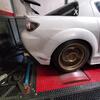
Testing compression with a Rotary Compression Tester is the way to go, cause "good compression" isn't just a metric of the psi/kpa or whatever measurement you go with for pressure, but also engine RPM plays a role in the calculation (and critical role at that).
You could have 110psi on all faces... but if you get that measurement at something crazy like 380rpm, the "corrected" value when you adjust for elevation and chart backwards to a standardized 250rpm will have a MUCH lower compression value. So you need not only pressure but cranking rpm, and this test MUST be done with the engine warmed up to operating temp to get a value that is relevant.
Coolant seals being bad is typically a bad omen. It becomes more than just coolant seals very quickly. The coolant causes corrosion/rust, and that causes pitting in the metals... that pitting will effect its ability to have engine seals (both hard seals like apex or side, or soft seals like coolant) struggle to maintain a sealed face... not to mention, major amounts of coolant internal to the motor could suggest warpage of the irons or housings, in which case doing just the seals will never lead to a successful result as the major metal components of the motor will never mate up surfaces properly.
This is not a quick, cheap, or easy repair. Your best bet is to use your motor as a "core" towards obtaining a replacement, not sure it would be worth much more than that.
Do NOT go with the ebay-special "JDM Import" engines. They will claim compression tested and all that, but they aren't and there is no real guarantees with them. Its a waste of money and you are better off investing in a properly rebuilt engine by a rotary-specific engine rebuilder who is known in the community. As others mentioned there is a list on this forum of different builders, depending on your location we can just right away recommend people to you as well.
Anticipate spending a --minimum-- of $4,000 (likely more) for an engine plus the cost of consumables like oil, coolant, replacing the clutch while the motor is out (go OEM exedy unless you want it to explode and potentially amputate a leg), throw out bearing, and any other maintenance and repairs while the engine is out... so maybe round up the number for the total costs of everything to somewhere around $5,200 to do everything correctly, and that is also considering/assuming that you would be doing all your own work. Add at least $1,200 or more towards labor for all the work.
You could have 110psi on all faces... but if you get that measurement at something crazy like 380rpm, the "corrected" value when you adjust for elevation and chart backwards to a standardized 250rpm will have a MUCH lower compression value. So you need not only pressure but cranking rpm, and this test MUST be done with the engine warmed up to operating temp to get a value that is relevant.
Coolant seals being bad is typically a bad omen. It becomes more than just coolant seals very quickly. The coolant causes corrosion/rust, and that causes pitting in the metals... that pitting will effect its ability to have engine seals (both hard seals like apex or side, or soft seals like coolant) struggle to maintain a sealed face... not to mention, major amounts of coolant internal to the motor could suggest warpage of the irons or housings, in which case doing just the seals will never lead to a successful result as the major metal components of the motor will never mate up surfaces properly.
This is not a quick, cheap, or easy repair. Your best bet is to use your motor as a "core" towards obtaining a replacement, not sure it would be worth much more than that.
Do NOT go with the ebay-special "JDM Import" engines. They will claim compression tested and all that, but they aren't and there is no real guarantees with them. Its a waste of money and you are better off investing in a properly rebuilt engine by a rotary-specific engine rebuilder who is known in the community. As others mentioned there is a list on this forum of different builders, depending on your location we can just right away recommend people to you as well.
Anticipate spending a --minimum-- of $4,000 (likely more) for an engine plus the cost of consumables like oil, coolant, replacing the clutch while the motor is out (go OEM exedy unless you want it to explode and potentially amputate a leg), throw out bearing, and any other maintenance and repairs while the engine is out... so maybe round up the number for the total costs of everything to somewhere around $5,200 to do everything correctly, and that is also considering/assuming that you would be doing all your own work. Add at least $1,200 or more towards labor for all the work.

Thread
Thread Starter
Forum
Replies
Last Post
saad84
Series I Trouble Shooting
8
Sep 15, 2012 08:41 AM
hocknscary87
Series I Trouble Shooting
1
Jun 12, 2011 01:41 PM
brandonkoern7
RX-8 Discussion
13
Mar 14, 2011 04:34 PM