When you click on links to various merchants on this site and make a purchase, this can result in this site earning a commission. Affiliate programs and affiliations include, but are not limited to, the eBay Partner Network.
So what’s everyone’s thought on those br10eix listed above from racing beat. I found a case of those in my garage from when I used to use them in my endurance race sleds. The threads and length are correct and I have the super thin wall socket I used to have to use with them.
I still have my denso plugs but curious why no one uses those?
I’m not gonna run them if it has any chance of damage. But it’s much tougher to find plugs for this thing now. Plus I have a case of them.
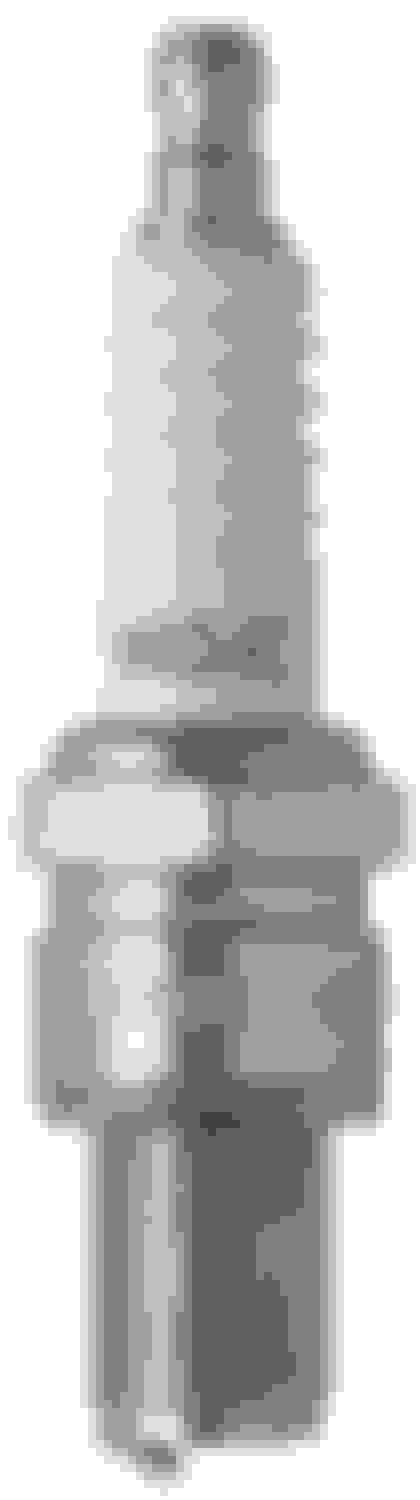
NGK R6601-10, part number 4017, for leading plugs
trailing plugs OEM
1000 miles so far
combination highway cruise, a few short trips, one autocross, one time trial
No observable issues with fouling thus far, even with a couple of short trips. WOT feels strong, but highway MPGs might suffer a little?
I'll see you and raise you a boat load of NGK iridium race plugs
I was curious to understand some of the differences between the NGK 7420 13B and 7440 Renesis plugs. Because I was able to locate the 7440-T plugs for about the same price as the 7420 (usually about 1.5x - 2x more). So I ordered the Renesis specific 7440 trailing plugs that are 2.5mm shorter, but along with the 7420 13B plugs since they're the same 21.5mm length as the Renesis and less expensive
some interesting notes for the difference between the 13B NGK 7420 and the Renesis 7440 version Iridium plugs
Hard to be sure since my eye doesn't have a micrometer, but electrode diameter on the 7420R and 7440R appears to be the same. The OE Renesis iridium electrode is thicker though; 0.8mm diameter. I would approximate the race plugs to be around 0.5mm based on what others have said.
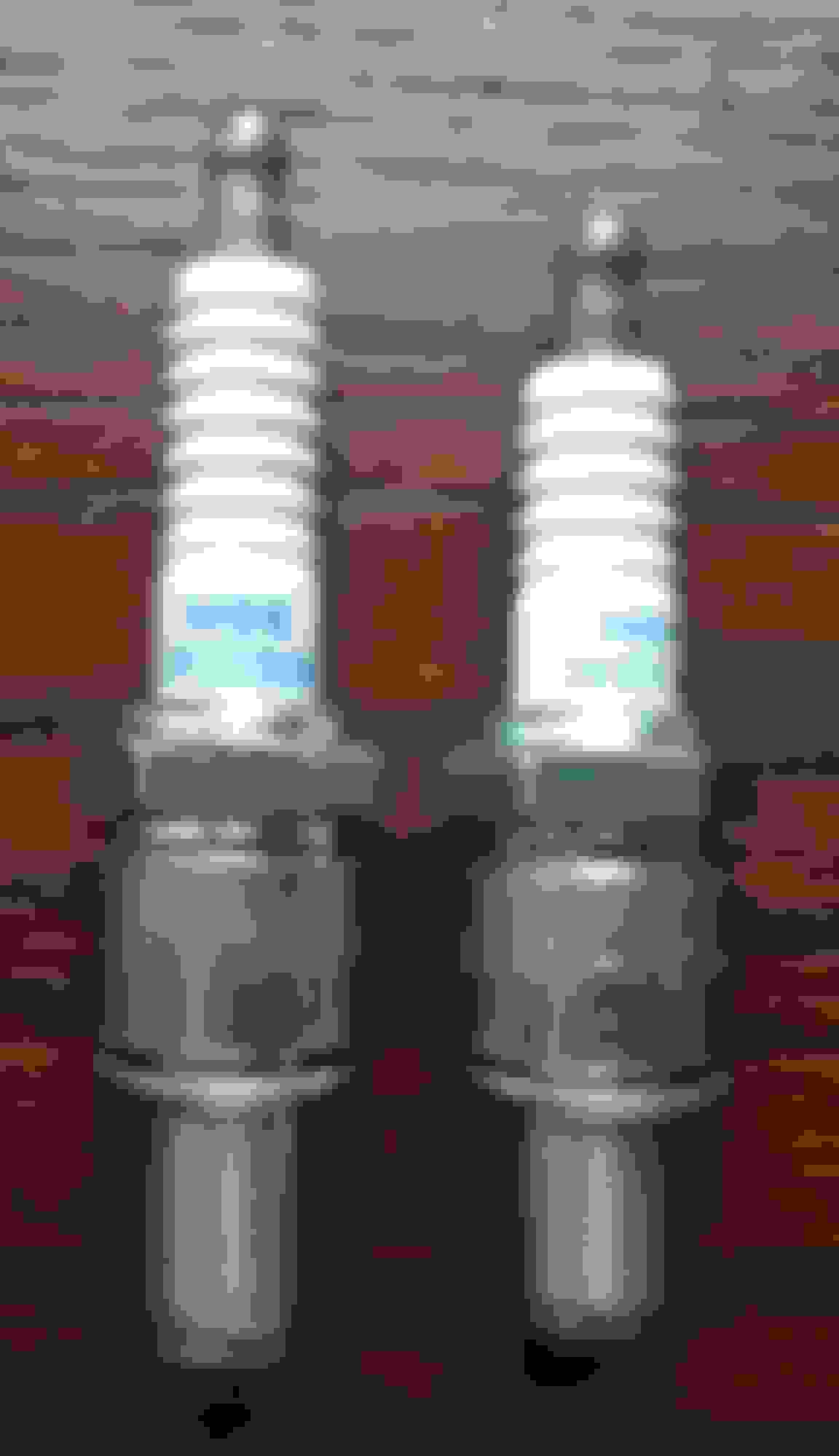
The 7440R grounding strap is visibly thicker; 7420 on left, 7440 on right. You can also see that the Renesis plug gap is much larger (0.046” - 0.049” standard factory, allowed max is upper 0.055” T - 0.059” L)
.
The 7440R ceramic end (spark plug connector) is 1/4" shorter; again 7420 L/T on left, 7440 T on right
came across this plug in a rotary engine drag car video with a mega ground strap, used in blown alcohol hemi drag engines, 19mm reach, non-resistor and nickel electrode though, but only $10
Mark, have you tried out these plugs yet? Given Howard Coleman's opinions, he seems to believe that those of us with strong ignition systems such as the IGN1A would not have fouling issues running a 10/11 heat range plug for normal driving. He specifically recommends 11's for all 4 plugs in his turbo applications. My understanding is that since the renesis should be tuned leaner than a higher power output turbo FD, our EGTs should be higher due to not having the extra fuel to cool down the combustion chamber? In this case the 11's all around should be better for the renesis, if my thinking is correct, and even for street use for those of us with the IGN1As.
I'm going to try some out and see how they work, given that they fit the plug correctly, may have to get some new cables and trim them down according to your comment from Lance "Which the modification to get the threaded end positioned correctly is making the external end shorter still. I go back to what Lance Nist stated though, that with the IGN-1A coil the spark boot should fully extend the full length of the ceramic to touch the metal grounding end."
Given that these fit I will likely run 10/11 for street/autox, then swap out the 10's for 11's for trackdays.
IMO is settled. run the coldest plug that works for you. colder plug =s less rotor housing distention. this applies to everyone, whether you are running the stock twins or doing crazytown. i have built over 180 13BREWs and other than the 10 or so which were new blocks all arrived with an elevated spark plug boss. mostly lower but always a small amount upper. a really good ignition system has always been important because the motor at any stage of output develops high combustion chamber pressure. often misfires (the result of inadequate ignition) are not noticeable unless you have a dyno plot at zero tuning. the second reason for having a really good ignition system is so you can fire colder plugs. colder plugs = less apex seal wear."
Howard Coleman - "i disagree w the comment that there is little diff between a 10 and 11 heat range 6601. i have run both and there is a clearly observable difference as to how they run. further, many NGK R7420 10 heat range show a fully annealed ground strap indicating they were running too hot whereas 11s typically show the strap is 50% annealed which is indicative of a happy plug heatwise.
whatever the difference is quantitatively i want the colder plug as i have looked at too many damaged rotor housings and center worn apex seals.. there is a positive financial calculation relating to parking your original ignition setup and adding four IGN-1A coils and Magnecor wires so you can, easily, run 11s...versus causing unnecessary wear on your housings & apex seals and losing compression."
quick updates since I put colder rx8 specific racing plugs in R7440s, plus new coils and wires. this is what lead plugs look like along with my compression readings. still deposits but less than before. I switched to low ash synthetic oil - penzoil euro L 5w30
Here is my plug condition post from the rx7 club, fwiw.
"NGK 7420-10, 13b-msp, IGN1A coils, timing has been advanced beyond stock, target AFR 13.11, these have 1 trackday and 6 autocrosses (my autox venue is high speed where I regularly hit top of 2nd in an rx8), roughly 2,500 miles on them. Premix at 1oz/gal for racing, omp output increased by 40%.
The car idles perfectly, no hot/cold start issues, no change from the stock heat range plugs which were 9/7"
I swapped the 10's in the trailing for 11's, and those appear to operate the same.
Left is trailing rear rotor, right is trailing front rotor
Left is leading rear rotor, right is leading front rotor
Valvoline VR1 20w50 was used for this run through. I've used the castrol gtx 40 weight in the past just to top up, and had a stock of idemitsu 30 weight I went through and only used that one for autox, since I got the stuff for free from a friend.
what every RX8 owner should already know; a good ignition system goes a long way on a rotary engine … of course most RX8 owners still refuse to believe the IGN-1A is the better coil.
.
I might provide a visual update this week if I feel like checking my plugs before my friday track day.
But things have I noticed going to an 11 trailing plug. For normal street driving I was getting more frequent backfires, downshifting from 4-3 would provide a slight backfire which is not normal for my car. The 1-2 shift backfire at around 8500rpm is still prevalent.
I did a double header autox this weekend where I did 30 runs between Saturday and Sunday on a 60s long course where I would hit the top of 2nd gear.
One thing others and myself noticed is that after my first couple runs on Saturday my 1-2 shift backfire completely disappeared, and this continued into Sundays event and for the drive home.
My thoughts are that the 11 range plugs are right on the threshold for my tune and ignition coil combo where they'll start to have some noticeable incomplete combustion compared to the 10's for normal street driving. Once I got some heat into the plugs and engine is where they really cleaned up nicely and ran amazing all weekend, but some people were sad they didn't get to hear the rotary backfires so it's a tradeoff I guess? Lol
I could also just be overly sensitive and looking for patterns in something that may not exist.
For a full time race car with stock ports, RB Race Tune, seems like I should run the 11 all around? Or is there a benefit to a 10 or 10.5 in the Leading with the 11 in the Trailing?
Sprint races for now so 20-40 minute races.
Going to use 11s after talking to some local racers. The engine had fresh stock 7s and 9s so will use those for break-in. I have a bunch of new in box 9s from Mazda that I will post for sale.