


RX-8 stopping distance.. this just in!

Thread Starter
Registered User
Joined: Aug 2002
Posts: 2,744
Likes: 1
RX-8 stopping distance.. this just in!
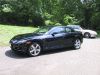
From AutoBild.de.. the gallery has a bunch of pictures, and there was German sentences to give a description of each picture underneath. Being bored, I ran them through a translator.. and after reading all of them, I got some great info!
For us Americans, that conversion runs to 118.11 feet! For comparison, a BMW 330 stops in 117 feet, a BMW M3 in 112 feet, Audi A4 in 118 feet, G35 in 129 feet.
Edit: Those stopping distances are from 60-0 MILES per hour. Since the conversion on 100km/h is around 62 miles, that second of stopping distance could be made up and we'd be beating the 330 as well :P Either way, the car stops might quick!
We are in good company! :D
I should get bored more often
The brake performance is to mark optimum with less than 36 meters from 100 km/h.
For us Americans, that conversion runs to 118.11 feet! For comparison, a BMW 330 stops in 117 feet, a BMW M3 in 112 feet, Audi A4 in 118 feet, G35 in 129 feet.
Edit: Those stopping distances are from 60-0 MILES per hour. Since the conversion on 100km/h is around 62 miles, that second of stopping distance could be made up and we'd be beating the 330 as well :P Either way, the car stops might quick!
We are in good company! :D
I should get bored more often

2009 BS Nat'l Champ
Joined: Oct 2002
Posts: 275
Likes: 0
From: Central CA
That's pretty decent. I expected no less. It's almost as good as the MR2 Spyder, a car with probably the best brakes around in the sub-$30k price range. I've personally experienced the unbelievable stopping power of these brakes on the track. You can move your braking points so far back it's not even funny -- scares passengers though.  The car hauls down from high speed in what seems like a second. Really amazing. Motorweek recorded an average of 94ft from 60-0 mph! But then Road & Track lists it as 115ft.
I expected no less. It's almost as good as the MR2 Spyder, a car with probably the best brakes around in the sub-$30k price range. I've personally experienced the unbelievable stopping power of these brakes on the track. You can move your braking points so far back it's not even funny -- scares passengers though. The car hauls down from high speed in what seems like a second. Really amazing. Motorweek recorded an average of 94ft from 60-0 mph! But then Road & Track lists it as 115ft.

I Am Rotary Powered
Joined: Jan 2002
Posts: 258
Likes: 0
From: San Francisco, California
weather conditions, track conditions, and tires can cause a HUGE discrepancy in the braking distances. To be as accurate as possible, all compared cars should be tested in the same conditions, though not necessarily the same size wheel and tire.



rotary courage
Joined: Aug 2002
Posts: 1,208
Likes: 0
From: :uoıʇɐɔoן
For comparison, the 93-95 FD was about 110 feet, so the RX-8 is only slightly behind in that regard, which is very good.
I wonder how the handling will measure up... so far it's looking like the 8 will be slightly slower than an FD around a track, but slightly slower than a FD is still quite fast - keep in mind that in 1993 the NSX and Porsche 911 Turbo were also slightly slower than an FD on a track.
I wonder how the handling will measure up... so far it's looking like the 8 will be slightly slower than an FD around a track, but slightly slower than a FD is still quite fast - keep in mind that in 1993 the NSX and Porsche 911 Turbo were also slightly slower than an FD on a track.

Registered User
Joined: Aug 2002
Posts: 221
Likes: 0
From: Phoenix, AZ
Re: RX-8 stopping distance.. this just in!
Originally posted by Hercules
For us Americans, that conversion runs to 118.11 feet! For comparison, a BMW 330 stops in 117 feet, a BMW M3 in 112 feet, Audi A4 in 118 feet, G35 in 129 feet.
Edit: Those stopping distances are from 60-0 MILES per hour. Since the conversion on 100km/h is around 62 miles[/B]
For us Americans, that conversion runs to 118.11 feet! For comparison, a BMW 330 stops in 117 feet, a BMW M3 in 112 feet, Audi A4 in 118 feet, G35 in 129 feet.
Edit: Those stopping distances are from 60-0 MILES per hour. Since the conversion on 100km/h is around 62 miles[/B]
For any math geniouses: please convert this measurement (62-0) down to 60-0. I think we all will be suprised. I could probably find some comparisons but would really like to know how to do it with an equation. The surprise will come from the statistic for cars doing 70-0 is easily double than that same car on the same day doing 60-0.
Thread Starter
Registered User
Joined: Aug 2002
Posts: 2,744
Likes: 1
Re: Re: RX-8 stopping distance.. this just in!
Originally posted by SPDFRK
For any math geniouses: please convert this measurement (62-0) down to 60-0. I think we all will be suprised. I could probably find some comparisons but would really like to know how to do it with an equation. The surprise will come from the statistic for cars doing 70-0 is easily double than that same car on the same day doing 60-0.
For any math geniouses: please convert this measurement (62-0) down to 60-0. I think we all will be suprised. I could probably find some comparisons but would really like to know how to do it with an equation. The surprise will come from the statistic for cars doing 70-0 is easily double than that same car on the same day doing 60-0.
I set up a ratio of 36 over 62, = x over 60. Then I cross multiplied, and divided to get x. I got X = to ~34.838. That's meters. I then converted meters to feet, and that comes to:
114.29790026201 feet
Not too shabby!
Registered User
Joined: Aug 2002
Posts: 221
Likes: 0
From: Phoenix, AZ
Correct me if I'm wrong but I plugged in 70 to see what came up because I felt your method was clearly too simple and I got 134ft which I certainly hope was true but I think you have missed a few laws of physics.
Registered User
Joined: Aug 2002
Posts: 221
Likes: 0
From: Phoenix, AZ
Now after thinking for a second, with this limited info this question is impossible to answer. There are just too many variables to come up with a good educated answer for the 70-0 distance.
Thread Starter
Registered User
Joined: Aug 2002
Posts: 2,744
Likes: 1
Originally posted by SPDFRK
Now after thinking for a second, with this limited info this question is impossible to answer. There are just too many variables to come up with a good educated answer for the 70-0 distance.
Now after thinking for a second, with this limited info this question is impossible to answer. There are just too many variables to come up with a good educated answer for the 70-0 distance.
I'll wait till C&D get their hands on it :D

RE member
Joined: Mar 2002
Posts: 528
Likes: 0
From: Aurora, CO
Re: Re: Re: RX-8 stopping distance.. this just in!
Originally posted by Hercules
Done. I did it this way:
I set up a ratio of 36 over 62, = x over 60. Then I cross multiplied, and divided to get x. I got X = to ~34.838. That's meters. I then converted meters to feet, and that comes to:
114.29790026201 feet Not too shabby!
Done. I did it this way:
I set up a ratio of 36 over 62, = x over 60. Then I cross multiplied, and divided to get x. I got X = to ~34.838. That's meters. I then converted meters to feet, and that comes to:
114.29790026201 feet
Not too shabby!
Then multipy the result by 60. For example:
118.11 ft / 62 mph = 1.905 * 60 mph = 114.3 ft
This is flawed however because it assumes that it will take will take 1.905 ft to slow down every mph.
As an example, if you are going 1mph and you stomped on the brake, would you go almost 2 feet before stopping?
What if you were going 100 mph and you stomped on the brake? You would certainly go more than 2 feet before dropping to 99mph. The time to slow down may be close to linear but the distance will not be. That would explain why the stopping distance for cars doing 70-0 is easily double than that same car on the same day doing 60-0.
The good news in all of this is that since the distance does not drop linearly with increased speed, we can expect the 60 - 0 stopping distance to be even less than 114 ft. :o
Brian

Pure Gold
Joined: Sep 2002
Posts: 763
Likes: 0
From: Bucks County, PA
Hercules - it's not a linear equation so your calculation is not correct.
For example a linear braking behaviour would suggest that a car that can brake from 60-0 in 120' would therefore brake 70-0 in 140', but in reality it's more like 170'.
To calculate it mathematically is probably impossible - too many variables (e.g. as well as braking force (and all it's variables) there is drag force (continuously changing with speed^2) and others).
I would guess that if 62.5-0 is 118' then 60-0 is definitely less than the linear solution of 114', maybe around 110'.
For example a linear braking behaviour would suggest that a car that can brake from 60-0 in 120' would therefore brake 70-0 in 140', but in reality it's more like 170'.
To calculate it mathematically is probably impossible - too many variables (e.g. as well as braking force (and all it's variables) there is drag force (continuously changing with speed^2) and others).
I would guess that if 62.5-0 is 118' then 60-0 is definitely less than the linear solution of 114', maybe around 110'.

Registered User
Joined: Aug 2002
Posts: 32
Likes: 0
From: Atlanta
I conclude from the given information. that it will be less then 118, and likely less then 117 for 60-0
Hercules may be close, another way to guesstimate it would be to use some physics and find the average braking force using F = ma for the known quanities, and then apply them to 60. This may be faily accurate assuming the ABS kept the braking force constant during a full run. There will be variations every run, so best you will ever get is an average anyway.
Hercules may be close, another way to guesstimate it would be to use some physics and find the average braking force using F = ma for the known quanities, and then apply them to 60. This may be faily accurate assuming the ABS kept the braking force constant during a full run. There will be variations every run, so best you will ever get is an average anyway.
Thread Starter
Registered User
Joined: Aug 2002
Posts: 2,744
Likes: 1
Originally posted by R.Cade
I conclude from the given information. that it will be less then 118, and likely less then 117 for 60-0
Hercules may be close, another way to guesstimate it would be to use some physics and find the average braking force using F = ma for the known quanities, and then apply them to 60. This may be faily accurate assuming the ABS kept the braking force constant during a full run. There will be variations every run, so best you will ever get is an average anyway.
I conclude from the given information. that it will be less then 118, and likely less then 117 for 60-0
Hercules may be close, another way to guesstimate it would be to use some physics and find the average braking force using F = ma for the known quanities, and then apply them to 60. This may be faily accurate assuming the ABS kept the braking force constant during a full run. There will be variations every run, so best you will ever get is an average anyway.
RE member
Joined: Mar 2002
Posts: 528
Likes: 0
From: Aurora, CO
I actually used 114 ft when I should have used 118.11 in the original equation. The answer I got is 110.67. All of you math people, please correct my calculations if I made any errors. I like trying to apply my mind but it has been quite awhile since I've really done any math.
The answer can be calculated by assuming that the time to slow down 1mph is the linear (not the distance). I used x as the variable for the time to slow down 1mph.
Speed * time = distance
62x + 61x + 60x + ... 3x + 2x + x = 118.11ft
63 * 31 = 1953
1953 mph (x) = 118.11 ft
1953 mph = 2864.4 ft/sec
2864.4 ft/sec (x) = 118.11 ft
x = .041234 sec (note the dist units cancel)
Assuming the linear rate of braking, it will take approx .041234 seconds to slow down 1 mph.
We now need to subtract 62x + 61 x distance from 118.11 ft
123mph (x) = 180.4 ft/sec (x)
180.4 ft/sec (x) = dist from 62mph to 60mph
180.4 ft/sec (.041234) = dist from 62mph to 60mph
dist from 62mph to 60mph = 7.4386
118.11ft - 7.4386ft = 110.67ft
Your guess of 14 ft was alittle low Herc. :D
Brian
The answer can be calculated by assuming that the time to slow down 1mph is the linear (not the distance). I used x as the variable for the time to slow down 1mph.
Speed * time = distance
62x + 61x + 60x + ... 3x + 2x + x = 118.11ft
63 * 31 = 1953
1953 mph (x) = 118.11 ft
1953 mph = 2864.4 ft/sec
2864.4 ft/sec (x) = 118.11 ft
x = .041234 sec (note the dist units cancel)
Assuming the linear rate of braking, it will take approx .041234 seconds to slow down 1 mph.
We now need to subtract 62x + 61 x distance from 118.11 ft
123mph (x) = 180.4 ft/sec (x)
180.4 ft/sec (x) = dist from 62mph to 60mph
180.4 ft/sec (.041234) = dist from 62mph to 60mph
dist from 62mph to 60mph = 7.4386
118.11ft - 7.4386ft = 110.67ft
Your guess of 14 ft was alittle low Herc. :D
Brian


Registered User
Joined: Oct 2002
Posts: 29
Likes: 0
From: Aachen, Germany
use s = 1/2 * a * t^2 (1)
and v = a * t <=> t = v/a (2)
(2) in (1): s = 1/2 v^2/a <=> a= v^2/(2s)
v is speed, s is stopping distance
100 km/h = 62,1 miles/h = 27,8 m/s
96,6 km/h = 60 miles/h = 26,8 m/s
112,7 km/h = 70 miles/h = 31,3 m/s
a = 27,8^2/(2 * 36) m/s^2 = 10,7 m/s^2
(a is approximately constant)
stopping distance at 60 miles/h:
s = v^2/(2a) = 33,6 m = 110 ft
stopping distance at 70 miles/h:
s = v^2/(2a) = 45,8 m = 150 ft
I doubt the 36 m from 100 km/h are a realistic value.
and v = a * t <=> t = v/a (2)
(2) in (1): s = 1/2 v^2/a <=> a= v^2/(2s)
v is speed, s is stopping distance
100 km/h = 62,1 miles/h = 27,8 m/s
96,6 km/h = 60 miles/h = 26,8 m/s
112,7 km/h = 70 miles/h = 31,3 m/s
a = 27,8^2/(2 * 36) m/s^2 = 10,7 m/s^2
(a is approximately constant)
stopping distance at 60 miles/h:
s = v^2/(2a) = 33,6 m = 110 ft
stopping distance at 70 miles/h:
s = v^2/(2a) = 45,8 m = 150 ft
I doubt the 36 m from 100 km/h are a realistic value.
RE member
Joined: Mar 2002
Posts: 528
Likes: 0
From: Aurora, CO
And who said that math wasn't practical? Nice work oecher, I assume those are various forms of motion equations (physics).
The 118.11ft (36m) from 100 km/h does seem a bit low. If that is assumed, math can show that the 60-0 distance will be approx 110ft. To compare this, see the below top cars in 60-0 braking:
2004 Mazda rx-7.....................110ft????
2002 BMW M3...........................112ft
2002 Lexus IS 300.....................113ft
2002 Lexus GS..........................114ft
2001 BMW M5...........................116ft
2002 Chevrolet Corvette Z06.......116ft
2002 Acura NSX........................117ft
:o
The direct quote from the Autobild caption is below:
Dynamische Optik: flacher Vorderwagen, große Räder, ausgestellte Kotflügel. Die Bremsleistung soll mit weniger als 36 Metern aus 100 km/h Bestwert markieren.
Babelfish.Altavista.com translated this to:
Dynamic optics: flat front car, large wheels, issued fenders. The brake performance is to mark optimum with less than 36 meters from 100 km/h.
Brian
Nice work oecher, I assume those are various forms of motion equations (physics).The 118.11ft (36m) from 100 km/h does seem a bit low. If that is assumed, math can show that the 60-0 distance will be approx 110ft. To compare this, see the below top cars in 60-0 braking:
2004 Mazda rx-7.....................110ft????
2002 BMW M3...........................112ft
2002 Lexus IS 300.....................113ft
2002 Lexus GS..........................114ft
2001 BMW M5...........................116ft
2002 Chevrolet Corvette Z06.......116ft
2002 Acura NSX........................117ft
:o
The direct quote from the Autobild caption is below:
Dynamische Optik: flacher Vorderwagen, große Räder, ausgestellte Kotflügel. Die Bremsleistung soll mit weniger als 36 Metern aus 100 km/h Bestwert markieren.
Babelfish.Altavista.com translated this to:
Dynamic optics: flat front car, large wheels, issued fenders. The brake performance is to mark optimum with less than 36 meters from 100 km/h.
Brian
Last edited by Buger; Nov 7, 2002 at 10:17 AM.
Pure Gold
Joined: Sep 2002
Posts: 763
Likes: 0
From: Bucks County, PA
Hey - I guessed 110' first!
Actually Newtons equations of motion only apply to CONSTANT acceleration or deceleration. They are:
v=u+at
s=ut+(1/2*at^2)
v^2=u^2+2as
where
u=initial velocity
v=final velocity
a=CONSTANT acceleration
s=distance
t=time
I did quite a few years of Applied Mathematics and Engineering at University and to really calculate this is MUCH tougher than that - definitely a 2nd or 3rd order differential. Even the simple formula F=m*a is in reality F=m*dv/dt or F=m*d^2s/dt^2 - luckily we can ignore changes in mass due to relativistic effects ). Then there are unknown variables like coefficient of friction for the surfaces (tires and road), possible stiction (even with ABS) etc.
For example you also need to allow for the constantly changing drag force:
F=0.5*rho*Cd*A*v^2
= 0.5*density of air*drag coefficient*cross-sectional area* velocity squared
That velocity squared is a killer at high speed as we all know (else all cars geared correctly could do 150mph+ easy).
Also the braking behaviour may be changing (non-linear) as the brakes heat up between the start of the test and the end etc. Same goes for tires.
The above will have minor effects both for and against deceleration, so I think 110'-113' is about right (on that day, on that track with the same car).
Actually Newtons equations of motion only apply to CONSTANT acceleration or deceleration. They are:
v=u+at
s=ut+(1/2*at^2)
v^2=u^2+2as
where
u=initial velocity
v=final velocity
a=CONSTANT acceleration
s=distance
t=time
I did quite a few years of Applied Mathematics and Engineering at University and to really calculate this is MUCH tougher than that - definitely a 2nd or 3rd order differential. Even the simple formula F=m*a is in reality F=m*dv/dt or F=m*d^2s/dt^2 - luckily we can ignore changes in mass due to relativistic effects
). Then there are unknown variables like coefficient of friction for the surfaces (tires and road), possible stiction (even with ABS) etc.For example you also need to allow for the constantly changing drag force:
F=0.5*rho*Cd*A*v^2
= 0.5*density of air*drag coefficient*cross-sectional area* velocity squared
That velocity squared is a killer at high speed as we all know (else all cars geared correctly could do 150mph+ easy).
Also the braking behaviour may be changing (non-linear) as the brakes heat up between the start of the test and the end etc. Same goes for tires.
The above will have minor effects both for and against deceleration, so I think 110'-113' is about right (on that day, on that track with the same car).

Drive it like U stole it!
Joined: Apr 2002
Posts: 859
Likes: 0
From: Woodbridge, Ontario
Originally posted by pelucidor
Even the simple formula F=m*a is in reality F=m*dv/dt or F=m*d^2s/dt^2 - luckily we can ignore changes in mass due to relativistic effects ). Then there are unknown variables like coefficient of friction for the surfaces (tires and road), possible stiction (even with ABS) etc.
Even the simple formula F=m*a is in reality F=m*dv/dt or F=m*d^2s/dt^2 - luckily we can ignore changes in mass due to relativistic effects
). Then there are unknown variables like coefficient of friction for the surfaces (tires and road), possible stiction (even with ABS) etc.